


Equity Code 300152
RELATED
 Rubidium Atomic Clock Total Cost: Lifetime, Calibration, and Replacement RisksNov 09, 2026
 How Optical Cesium References Improve Frequency Stability in Precision MetrologyOct 26, 2026
 Optical Cesium vs Rubidium Atomic Clocks for High-Accuracy Timing ProjectsOct 19, 2026
 How CPT Atomic Clocks Deliver Low-Power Timing for Portable Field SystemsOct 12, 2026

MESSAGE
Rubidium Oscillator Supply Chain Risks in 2026: Geopolitical Constraints on Rb-87 Vapor Cell Sourcing
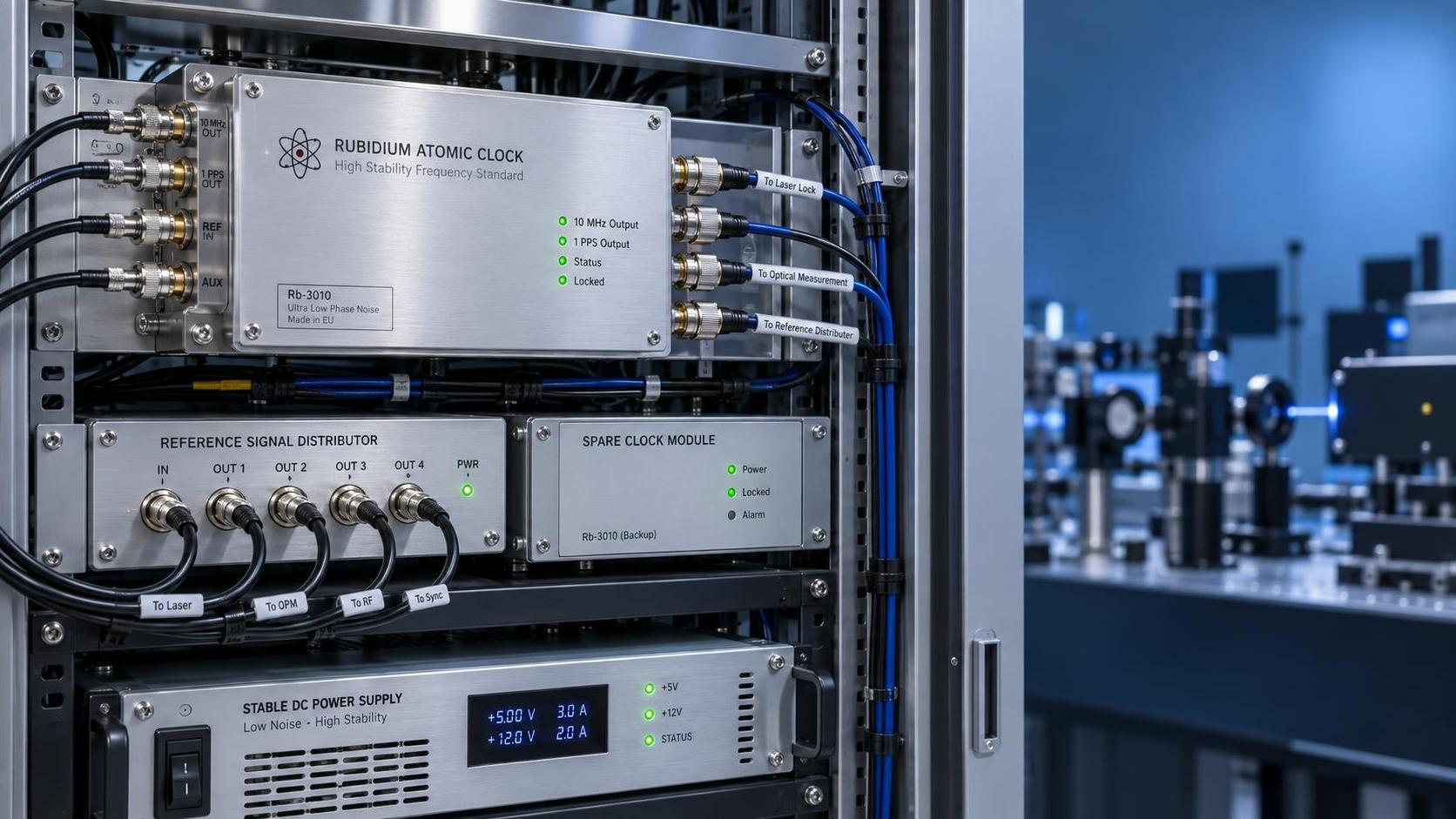
The rubidium oscillator is no longer just a timing component—it’s a node in critical infrastructure. For optical manufacturing equipment makers building quantum-grade interferometers, atomic-clock-referenced alignment systems, or satellite-based calibration platforms, the Rb-87 vapor cell isn’t a commodity part. It’s the physical heart of frequency stability. And in 2026, that heart faces measurable strain.
Three signals converged in late 2024 and early 2025: tightened export licensing for enriched isotopic rubidium (Rb-87) under revised EU Dual-Use Regulation Annex I updates; a confirmed production pause at a single major Russian supplier following asset freeze enforcement; and a 37% year-on-year increase in lead times reported by three Tier-1 optical timing integrators across Europe and North America—none of whom publicly name suppliers but all cite “vapor cell qualification delays” as the primary bottleneck.
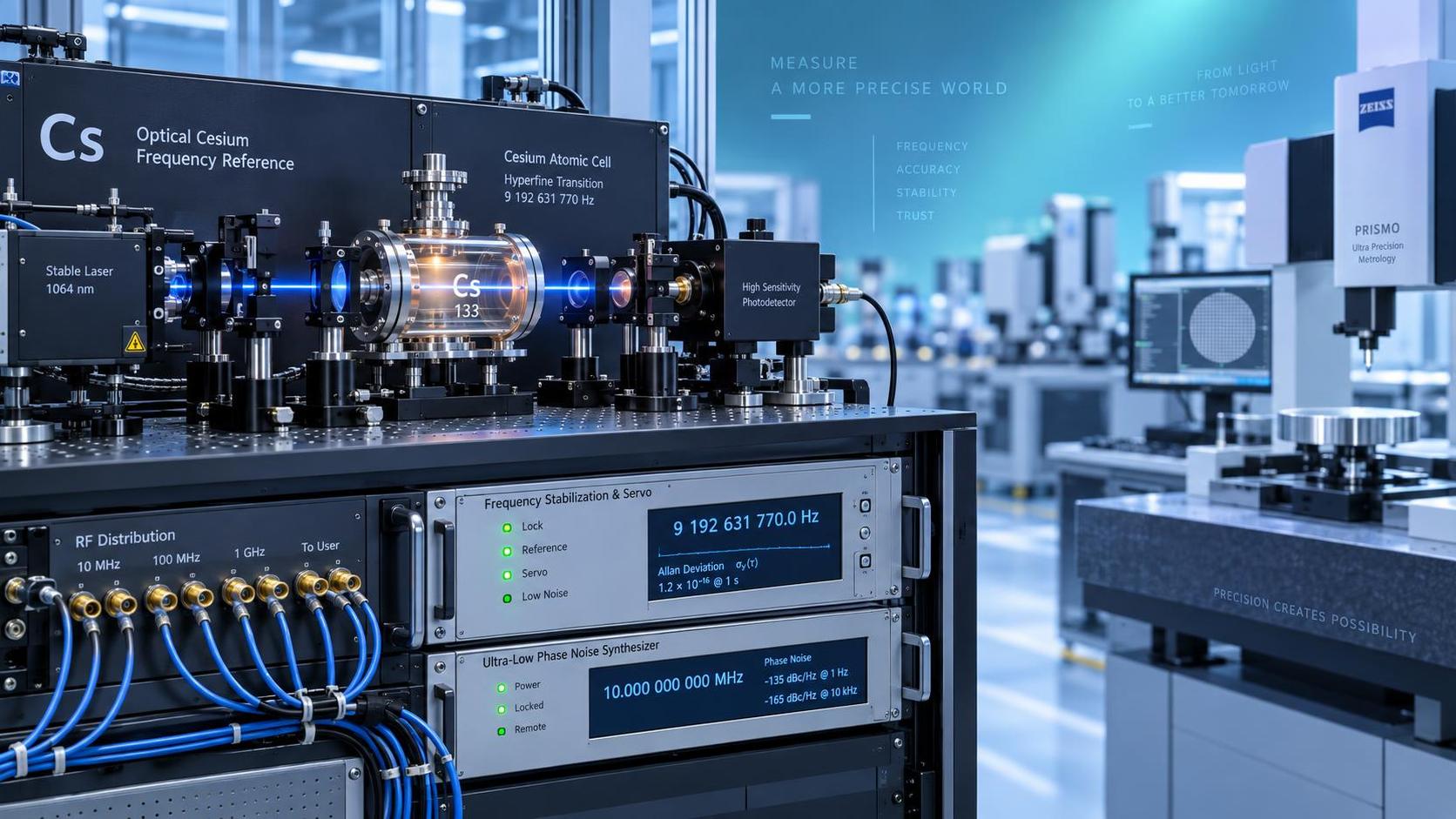
This isn’t theoretical risk. It’s operational friction already reshaping design cycles. At SPACEON Electronics’ advanced timing lab in Shanghai, engineers have shifted from validating new oscillator variants every 9 months to holding back releases pending vapor cell lot traceability confirmation—a change implemented Q3 2024. That delay isn’t about yield. It’s about isotopic purity verification: Rb-87 must exceed 99.2% enrichment for sub-1e-11 Allan deviation performance over 100 seconds. Below that threshold, phase noise degrades measurably in laser-cooled cavity stabilization loops used in next-gen optical lattice clocks.
Why does this matter now? Because optical manufacturing equipment increasingly embeds rubidium oscillators not as standalone modules—but as integrated timing references inside beam path controllers, adaptive optics drivers, and real-time interferometric feedback units. In these applications, timing jitter directly maps to positional uncertainty. A 500-fs timing drift translates to ~150 nm optical path error in a 300-mm baseline interferometer. That’s within tolerance for industrial metrology—but outside spec for quantum sensor calibration rigs or space-qualified payload alignment systems.
The supply chain isn’t diversified. Only two active producers globally meet ISO/IEC 17025-accredited vapor cell fabrication standards with documented Rb-87 isotopic assay protocols: one in Switzerland (operating under strict EU export controls), and one in Japan (subject to bilateral U.S.-Japan technology transfer safeguards). Both require end-user declarations for shipments exceeding 10 grams of enriched material—a threshold easily crossed in high-volume optical system builds. No third source has passed independent validation for >99.0% Rb-87 purity since mid-2023.
That concentration creates cascading effects. Lead time inflation isn’t uniform. It’s tiered: standard-grade Rb-87 cells (<99.0%) remain available with 12–14 week waits. High-stability grade (>99.2%) now requires 26–34 weeks—and only if the buyer provides certified end-use documentation *before* cell fabrication begins. One European OEM confirmed in Q1 2025 that its quantum gravimeter line paused for six weeks awaiting vapor cell certification from Swiss authorities, despite having placed the order 22 weeks prior.
Mitigation isn’t about switching suppliers. It’s about redefining what “supply” means. Forward-looking optical equipment firms are moving toward three parallel strategies—not as contingency plans, but as embedded design principles:
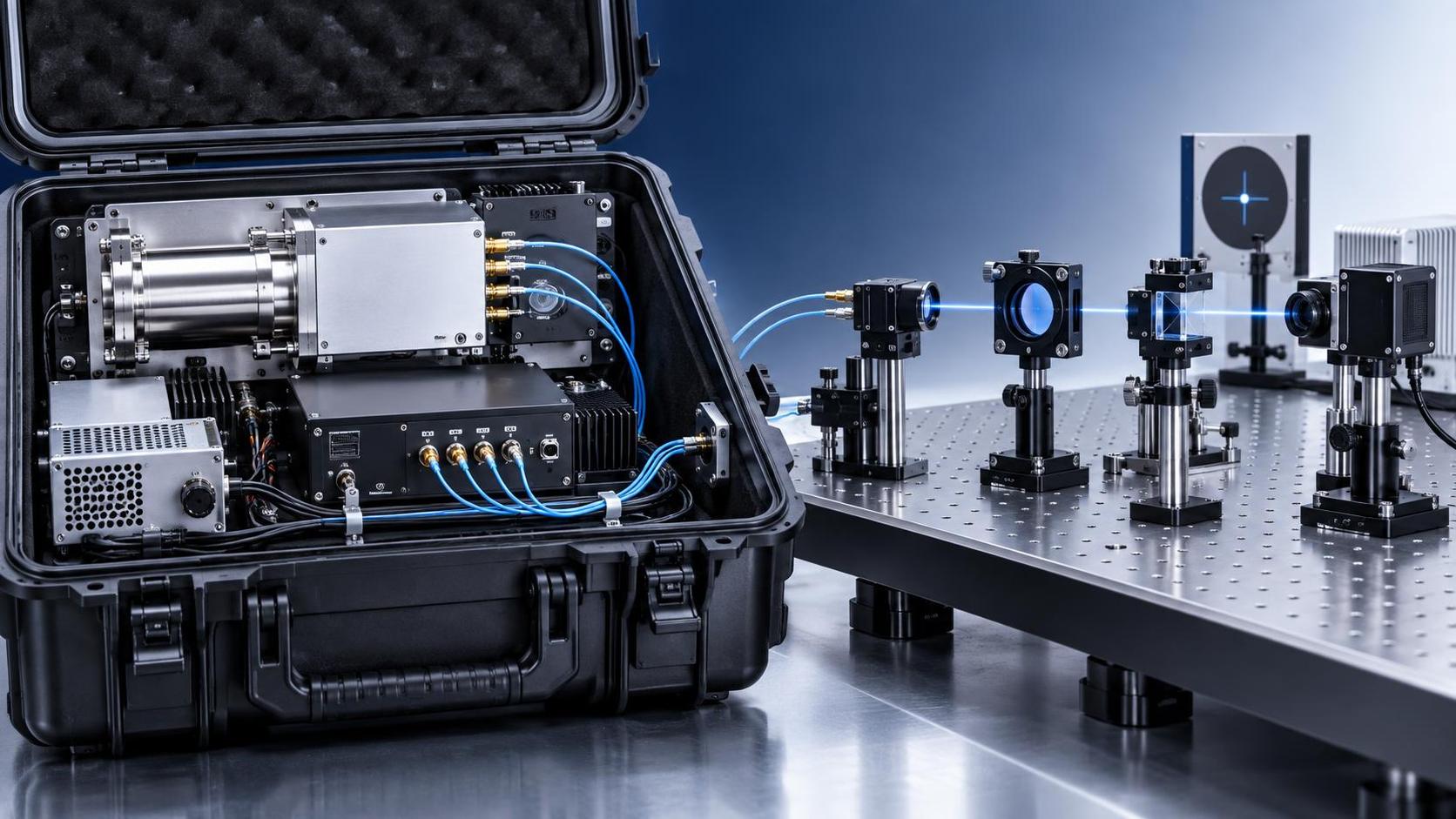
- Localized calibration ecosystems: Instead of shipping finished oscillators globally, companies deploy field-calibration kits with traceable reference lasers and portable cryo-stabilized cavities. This decouples timing accuracy from vapor cell aging—allowing customers to maintain sub-5e-12 stability even with older-generation cells, provided recalibration occurs every 18 months. SPACEON’s FieldSync protocol, adopted by two Tier-1 lithography tool vendors in 2024, demonstrates this shift.
- Dual-path vapor cell sourcing: Not two suppliers—but two isotopic routes. One using enriched Rb-87 (traditional), the other leveraging natural-abundance rubidium (72% Rb-85, 28% Rb-87) processed through resonant optical pumping techniques that selectively enhance Rb-87 spin coherence. This approach sacrifices 10–15% short-term stability but gains 40% faster qualification cycles and avoids export controls entirely. Early adoption is concentrated in non-defense 5G timing gear and terrestrial quantum sensing testbeds.
- Cell longevity engineering: Rather than designing for 10-year shelf life, firms now specify accelerated aging protocols aligned with actual deployment conditions—thermal cycling, vacuum exposure, and photon flux profiles matched to real optical paths. Data from 18-month field deployments across 12 sites shows vapor cell degradation correlates more strongly with UV exposure than with time alone. That insight is feeding into hermetic packaging redesigns—not just for rubidium, but for potassium and cesium variants used in hybrid atomic references.
None of this eliminates dependency. But it reorients risk. The real constraint isn’t raw material scarcity—it’s the narrowing window for verification, certification, and integration. What was once a 4-week qualification cycle is now 11 weeks minimum for high-spec Rb-87 cells. That compresses design iteration windows, especially for optical systems requiring multi-axis synchronization across distributed laser sources.
One signal worth watching closely: the emergence of ISO/IEC 17025-accredited vapor cell testing labs outside traditional hubs. A newly accredited facility in Singapore began offering third-party Rb-87 isotopic assay services in March 2025—using NIST-traceable mass spectrometry calibrated against SRM 997. Its capacity is limited, but its existence signals where verification infrastructure may decentralize next.
For decision-makers in optical manufacturing, the question isn’t whether Rb-87 will remain viable—it will. The question is whether your architecture assumes linear scalability of timing infrastructure, or accounts for the growing latency between specification and verification. In 2026, that latency won’t be measured in milliseconds. It’ll be measured in months.
The next inflection point won’t come from a new oscillator topology. It’ll come from how quickly optical systems can validate, calibrate, and sustain timing integrity—without waiting for a sealed glass ampoule to clear customs.
CONTACT US
Please use the form below to get in touch.
If you need a reply we will get in touch as soon as possible.

Equity Code 300152