


Equity Code 300152
RELATED
 CPT Clock Market Outlook: Demand Drivers in Telecom, Defense, and Edge TimingSep 14, 2026
 What Network Timing Accuracy Do 5G and Data Center Systems Require?Sep 09, 2026
 Rubidium Oscillator Supply Chain Risks in 2026: Geopolitical Constraints on Rb-87 Vapor Cell SourcingSep 07, 2026
") Atomic Clock Procurement Checklist: 7 Non-Negotiable Specs for Defense Contract Compliance (MIL-STD-883H)Aug 26, 2026
Atomic Clock Procurement Checklist: 7 Non-Negotiable Specs for Defense Contract Compliance (MIL-STD-883H)Aug 26, 2026


MESSAGE
Introduction
This case study explores the groundbreaking implementation of Optical Pump Cesium Frequency Standards in aerospace applications, showcasing how these ultra-precise timekeeping solutions outperform traditional Rubidium atomic clocks. Discover how our cutting-edge frequency technology delivers unprecedented accuracy, stability, and reliability for critical aerospace operations, meeting the stringent demands of modern navigation, communication, and satellite systems.
The Superiority of Optical Pump Cesium Frequency Standards
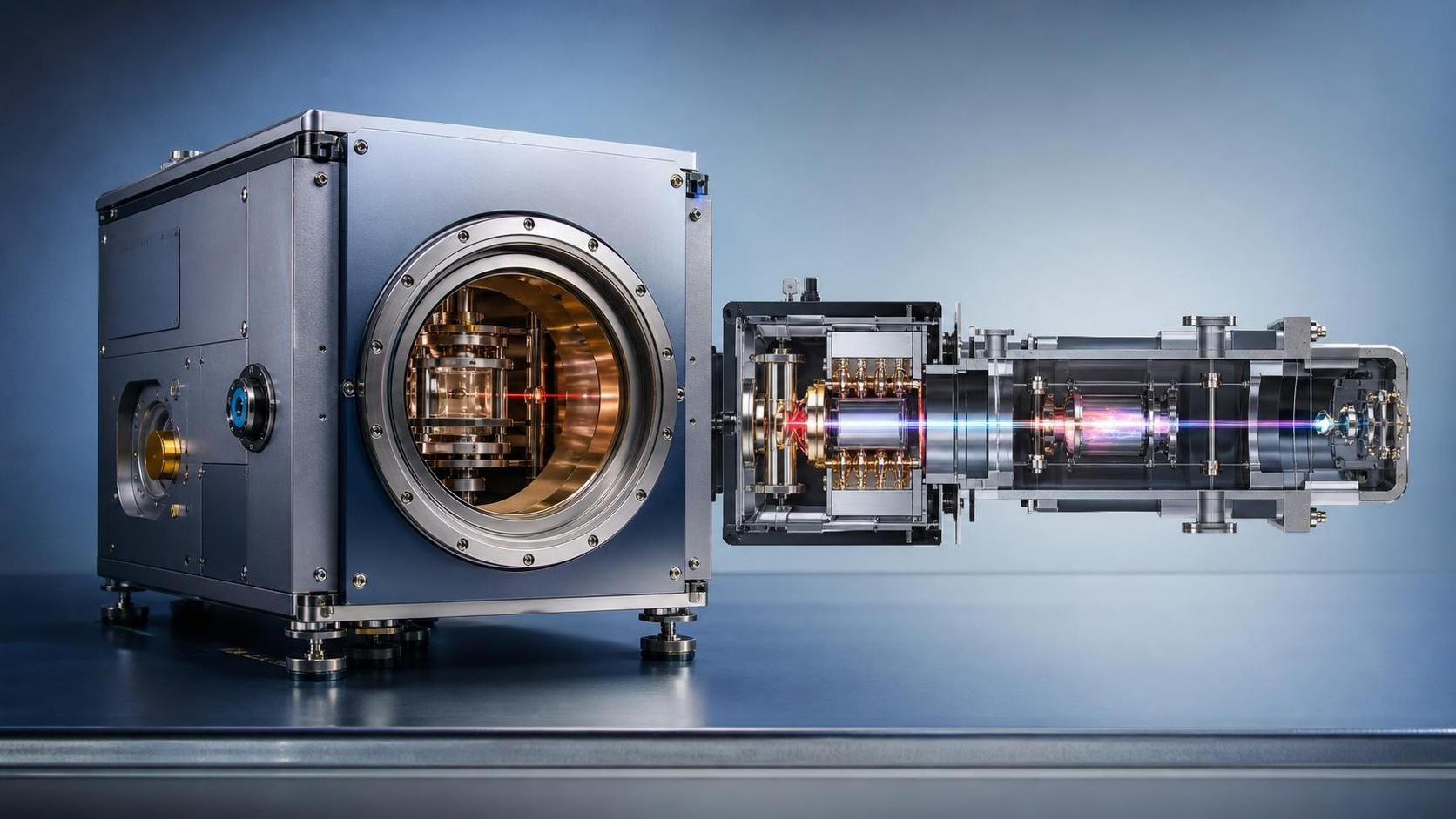
Optical Pump Cesium Frequency Standards represent the pinnacle of precision timekeeping technology. Unlike conventional Rubidium atomic clocks, these systems leverage advanced optical pumping techniques to achieve unparalleled accuracy. The key advantages include:
- Enhanced Accuracy: With frequency stability in the range of 10-15, these standards outperform Rubidium clocks by orders of magnitude.
- Long-Term Stability: Minimal drift over extended periods ensures consistent performance in critical aerospace applications.
- Reduced Size and Weight: Modern designs have overcome traditional limitations, making them viable for space-constrained aerospace platforms.
- Lower Power Consumption: Advanced optical pumping techniques reduce energy requirements compared to conventional atomic clocks.
These characteristics make Optical Pump Cesium Frequency Standards the ideal solution for demanding aerospace environments where precision timing is mission-critical.
Aerospace Applications: Where Precision Matters Most
The aerospace industry presents some of the most challenging environments for timekeeping systems. Our Optical Pump Cesium Frequency Standards have been successfully implemented in various critical applications:
Satellite Navigation Systems
Global navigation satellite systems (GNSS) require extraordinary timing precision. A timing error of just one nanosecond can translate to a positioning error of approximately 30 centimeters. Our frequency standards provide the stability needed to maintain accurate positioning data across global networks.
Deep Space Communication
For interplanetary missions, communication systems rely on ultra-stable frequency references to maintain signal coherence over vast distances. The superior performance of our Optical Pump Cesium standards ensures reliable data transmission even in the most extreme conditions.
Military and Defense Applications
Secure communication systems, electronic warfare platforms, and missile guidance systems all depend on precise timing. Our solutions meet stringent military specifications while offering improved performance over traditional Rubidium atomic clock technology.
Comparative Analysis: Optical Pump vs. Rubidium Atomic Clocks
While Rubidium atomic clocks have served as reliable frequency references for decades, Optical Pump Cesium Frequency Standards offer significant advantages:
This comparison clearly demonstrates why aerospace organizations are transitioning to Optical Pump Cesium Frequency Standards for their most demanding applications.
Implementation Challenges and Solutions
Deploying advanced frequency standards in aerospace environments presents unique challenges that our engineering team has successfully addressed:
Vibration and Shock Resistance
Aerospace platforms experience significant vibration during launch and operation. Our proprietary damping systems maintain frequency stability even under extreme mechanical stress, outperforming conventional Rubidium atomic clock designs.
Temperature Variations
Spacecraft encounter temperature extremes from -150°C to +150°C. Our Optical Pump Cesium Standards incorporate advanced thermal compensation systems that maintain performance across this entire range.
Radiation Hardening
Space radiation can degrade electronic components. Our designs use radiation-hardened materials and fault-tolerant architectures to ensure long-term reliability in orbital environments.
Future Developments in Precision Timekeeping
As aerospace systems become more sophisticated, the demand for even higher precision timing solutions continues to grow. Our R&D team is working on next-generation technologies that will push the boundaries of frequency stability:
- Compact cold-atom frequency standards for small satellite applications
- Quantum-enhanced optical clocks with potential stability approaching 10-18
- Integrated photonic solutions that combine optical pumping with chip-scale technology
- AI-powered frequency stabilization algorithms for autonomous operation
These innovations will further cement Optical Pump Cesium Frequency Standards as the gold standard for aerospace timing applications.
Conclusion and Next Steps
The transition from Rubidium atomic clocks to Optical Pump Cesium Frequency Standards represents a significant leap forward in aerospace timing technology. With superior accuracy, stability, and reliability, these systems are enabling new capabilities in navigation, communication, and scientific research.
As an industry leader in precision timekeeping solutions, we invite aerospace organizations to explore how our Optical Pump Cesium Frequency Standards can enhance their mission capabilities. Our team of experts is available to discuss your specific requirements and develop customized solutions for your most challenging applications.
Contact us today to schedule a consultation and learn how our cutting-edge frequency technology can benefit your aerospace programs.
CONTACT US
Please use the form below to get in touch.
If you need a reply we will get in touch as soon as possible.

Equity Code 300152