


Equity Code 300152
RELATED
 CPT Atomic Clock Drift: Diagnosing Temperature, Light, and Magnetic Field EffectsSep 28, 2026
 CPT Atomic Clock Qualification Tests for Stability, Aging, and Environmental StressSep 22, 2026
 When a CPT Clock Is the Right Timing Source for GNSS-Denied InfrastructureSep 20, 2026
 CPT Clock Market Outlook: Demand Drivers in Telecom, Defense, and Edge TimingSep 14, 2026


MESSAGE
Choosing the right cpt atomic clock can directly affect timing accuracy, system stability, power efficiency, and long-term investment value. For business evaluators in optical manufacturing equipment, a confident comparison requires looking beyond basic specifications to assess performance consistency, integration flexibility, reliability, and supplier expertise. This guide will help you compare key options clearly and make informed decisions that support precise and dependable time-frequency infrastructure.
In optical manufacturing equipment, timing quality influences more than synchronization. It affects motion control alignment, laser process repeatability, sensor coordination, data timestamp integrity, and networked production stability across 24/7 lines.
For business evaluators, the challenge is practical: how to compare a cpt atomic clock not only as a component, but as a long-term infrastructure decision tied to integration cost, maintenance risk, and system uptime.
Why a cpt atomic clock matters in optical manufacturing equipment
Optical manufacturing environments often combine precision motion platforms, interferometric measurement systems, laser modules, machine vision, and industrial Ethernet networks. In these systems, timing drift of even small levels can accumulate into measurable process deviation over 8-hour, 12-hour, or continuous 24-hour production cycles.
A cpt atomic clock provides a highly stable time and frequency reference that helps maintain synchronization between subsystems. This is especially valuable where nanosecond-level coordination, low phase noise, or long holdover capability supports process consistency.
Typical timing-sensitive applications
- Laser cutting and micro-processing platforms that require repeatable pulse control over long runs
- Optical inspection equipment using multi-camera triggering with sub-microsecond coordination
- Wafer, lens, or photonic component production lines relying on synchronized data collection
- Distributed manufacturing cells where 4 to 20 devices must remain aligned to one reference source
Business impact beyond technical performance
When evaluators compare cpt atomic clock options, they should connect technical metrics to business outcomes. Better timing stability can reduce recalibration intervals, lower rework probability, and improve consistency between shifts, sites, or production batches.
For example, if an optical line runs 3 shifts and performs scheduled calibration every 2 weeks, a more stable reference may help protect measurement repeatability between maintenance windows. That means fewer disruptions and clearer yield control.
The core comparison criteria for a confident evaluation
A reliable comparison framework should include at least 6 dimensions: frequency stability, holdover behavior, power consumption, interface compatibility, environmental tolerance, and supplier support. Looking at only one number, such as short-term stability, is rarely enough.
The table below helps business evaluators compare cpt atomic clock options against practical decision factors used in optical manufacturing equipment procurement.
The most important takeaway is balance. A cpt atomic clock with excellent lab performance but weak integration support may create hidden engineering cost. For evaluators, the strongest option is usually the one with stable field performance and lower deployment friction.
Stability should be judged over multiple time windows
Do not rely on a single headline number. Optical manufacturing systems may need timing consistency over 1 second for trigger precision, over 10 to 100 seconds for process control stability, and over several hours for continuous production.
Ask suppliers to explain how the cpt atomic clock behaves in real operating windows, not only under ideal laboratory conditions. This is especially important for inspection tools, exposure systems, and tightly synchronized laser platforms.
Power and thermal behavior affect cabinet design
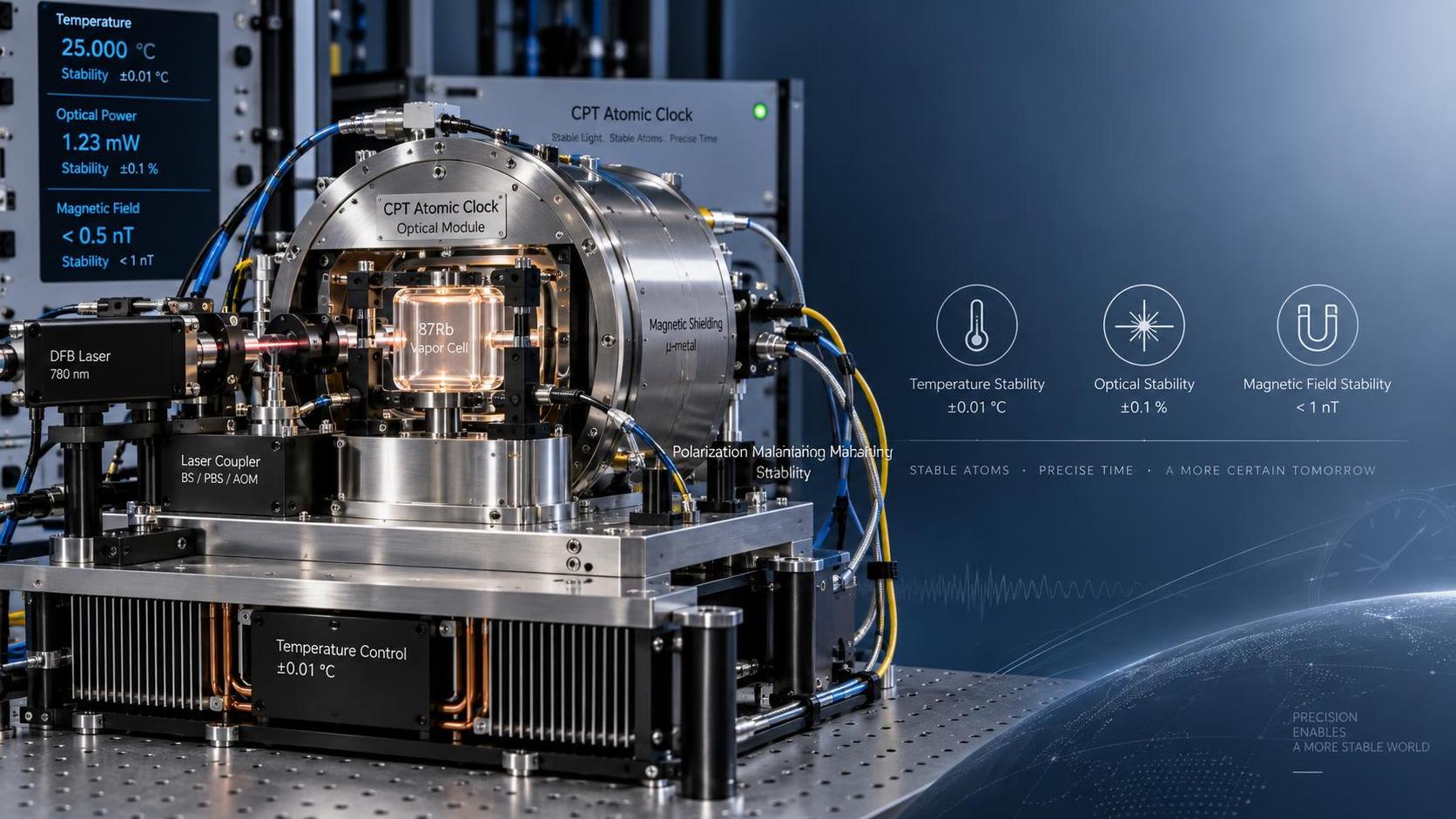
In compact optical equipment, thermal management is a procurement concern, not just an engineering detail. A lower-power cpt atomic clock may simplify enclosure design, reduce fan load, and help maintain stable internal temperature bands such as 20°C to 25°C.
This matters where timing modules sit near sensitive optics, servo electronics, or vibration-controlled assemblies. Small thermal gains can support broader system stability over months of operation.
How to compare integration fit, reliability, and supplier capability
In B2B procurement, a cpt atomic clock should be assessed as part of a full solution chain. That includes system design support, reference architecture guidance, test cooperation, delivery communication, and after-sales responsiveness.
A supplier focused on high-precision time and frequency products can add value by helping global customers build accurate, stable, low-consumption, and secure space-time infrastructure for advanced optical manufacturing environments.
Questions to ask during commercial evaluation
- What interfaces are standard, and what requires customization?
- What is the typical lead time: 2 to 4 weeks, 4 to 8 weeks, or longer?
- Can the supplier support environmental validation and integration testing?
- What alarm, health monitoring, and remote diagnostics functions are available?
- How does the cpt atomic clock perform during external timing loss or restart events?
These questions help uncover downstream cost. A lower initial purchase price may be offset by longer integration cycles, additional interface converters, or slower issue resolution during factory acceptance testing.
The next table outlines a practical procurement checklist for comparing cpt atomic clock suppliers in optical manufacturing equipment projects.
For business evaluators, supplier capability can be just as decisive as product metrics. A technically strong partner can shorten proof-of-concept work, improve deployment confidence, and support multi-site standardization when production expands.
Why solution support matters
Optical manufacturing equipment rarely uses timing modules in isolation. They connect with oscillators, synchronization units, test systems, controllers, and network timing paths. Suppliers with broader time-frequency expertise are better positioned to recommend a complete, lower-risk architecture.
That is particularly useful when a project must meet multiple priorities at once: high precision, low power, stable long-term operation, and secure infrastructure for globally deployed equipment.
Common comparison mistakes and how to avoid them
Many procurement teams compare a cpt atomic clock too narrowly. They may focus on brochure data, assume all timing references integrate the same way, or overlook operating conditions on real factory floors.
Mistake 1: comparing only upfront price
Initial cost is only one part of total investment. Integration hours, cabinet redesign, validation testing, spare planning, and downtime risk often have a larger effect over a 3-year to 7-year equipment lifecycle.
Mistake 2: ignoring holdover and recovery behavior
If external synchronization is interrupted, the cpt atomic clock must maintain acceptable performance and recover predictably. This is critical for optical production lines where process interruption can affect in-process material, calibration status, and batch traceability.
Mistake 3: underestimating environmental conditions
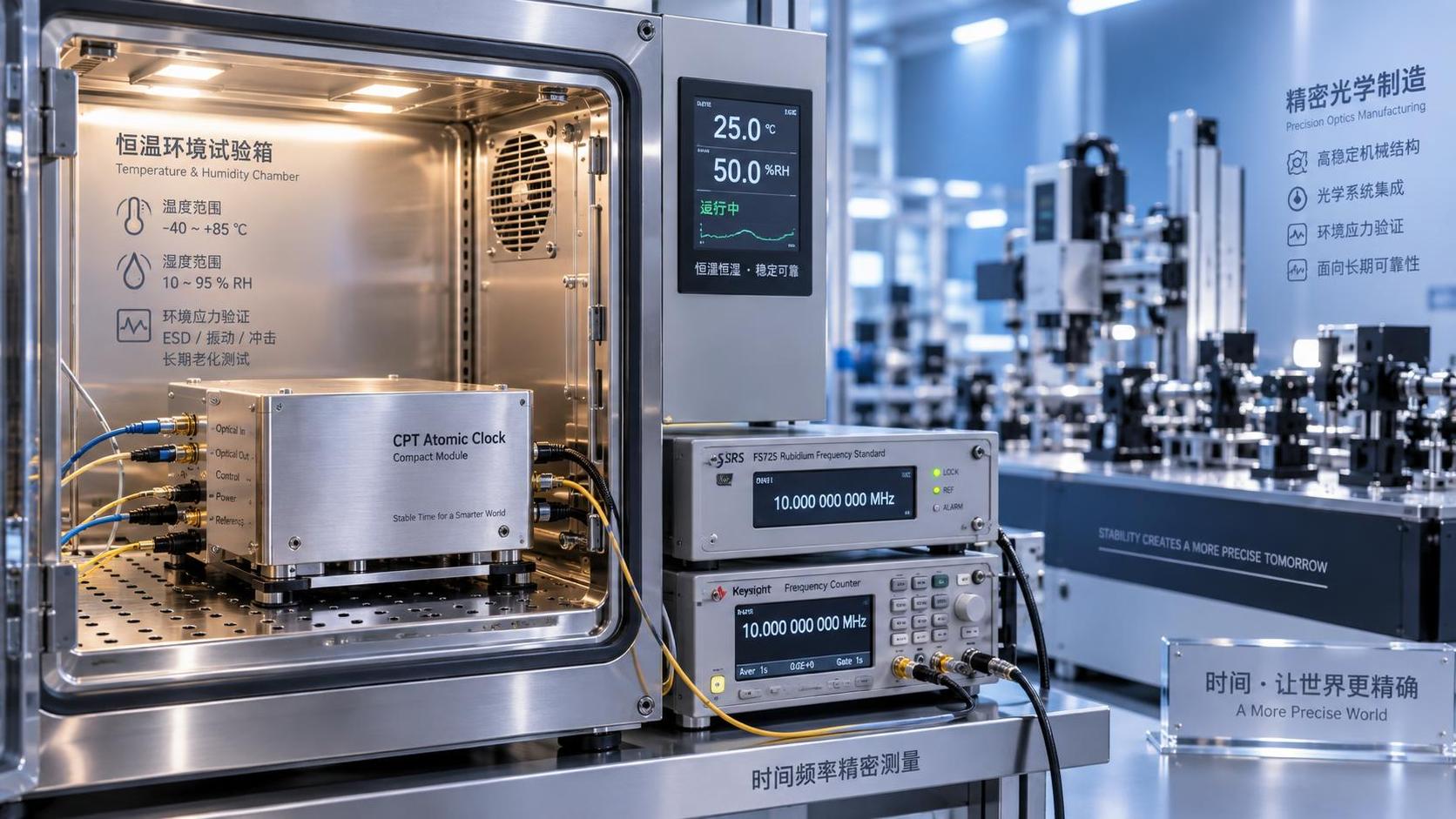
Factory installations may face vibration, electromagnetic noise, or ambient temperature changes beyond tightly controlled labs. Evaluators should verify realistic operating ranges, not just nominal conditions.
Mistake 4: treating documentation as secondary
Incomplete interface definitions or startup instructions can add days or even weeks during commissioning. In B2B projects, documentation quality is a measurable procurement factor because it directly affects implementation speed.
A practical decision path for business evaluators
A confident decision usually follows 4 steps. First, define the application timing target. Second, rank the technical and commercial criteria. Third, test shortlist options against real integration conditions. Fourth, confirm lifecycle support before final approval.
Step-by-step evaluation model
- Map the equipment architecture, including controllers, sensors, network timing, and external references.
- Set acceptable thresholds for stability, power, interfaces, and holdover performance.
- Compare 2 to 3 shortlisted cpt atomic clock options with engineering and procurement together.
- Request technical clarification, delivery planning, and support commitments before purchase.
This process helps evaluators move from specification reading to real deployment judgment. It also improves alignment between procurement, system engineering, and operations teams.
When to involve a specialized supplier
If the project includes high-precision synchronization, low-consumption requirements, cross-site deployment, or custom interface coordination, early supplier involvement is usually worthwhile. It can reduce redesign risk and accelerate decision-making.
Companies backed by deep time-frequency expertise and strong innovation resources can often support both component selection and broader infrastructure planning for advanced optical manufacturing equipment.
A strong cpt atomic clock comparison is never based on one specification alone. Business evaluators should judge performance across multiple time windows, confirm integration fit, examine holdover and environmental behavior, and weigh supplier capability as part of total investment value.
For optical manufacturing equipment, the best choice is the option that delivers accurate, stable, low-consumption timing support while fitting real production needs and long-term infrastructure goals. If you are reviewing cpt atomic clock options for a new project or upgrade plan, contact us to discuss your application, request a tailored solution, and explore more time-frequency solutions for precision optical systems.
CONTACT US
Please use the form below to get in touch.
If you need a reply we will get in touch as soon as possible.

Equity Code 300152