


Equity Code 300152
RELATED
 CPT Atomic Clock Qualification Tests for Stability, Aging, and Environmental StressSep 22, 2026
 When a CPT Clock Is the Right Timing Source for GNSS-Denied InfrastructureSep 20, 2026
 CPT Clock Market Outlook: Demand Drivers in Telecom, Defense, and Edge TimingSep 14, 2026
 What Network Timing Accuracy Do 5G and Data Center Systems Require?Sep 09, 2026

MESSAGE
In long-term system planning, Satellite Atomic technology plays a critical role in ensuring timing accuracy, operational stability, and future scalability. For project managers and engineering leaders, choosing the right time and frequency foundation is not just a technical decision but a strategic one. With growing demands for reliable, low-power, and secure infrastructure, understanding why Satellite Atomic matters can help reduce risk and support more resilient system development.
Why does Satellite Atomic matter so much in optical manufacturing equipment planning?
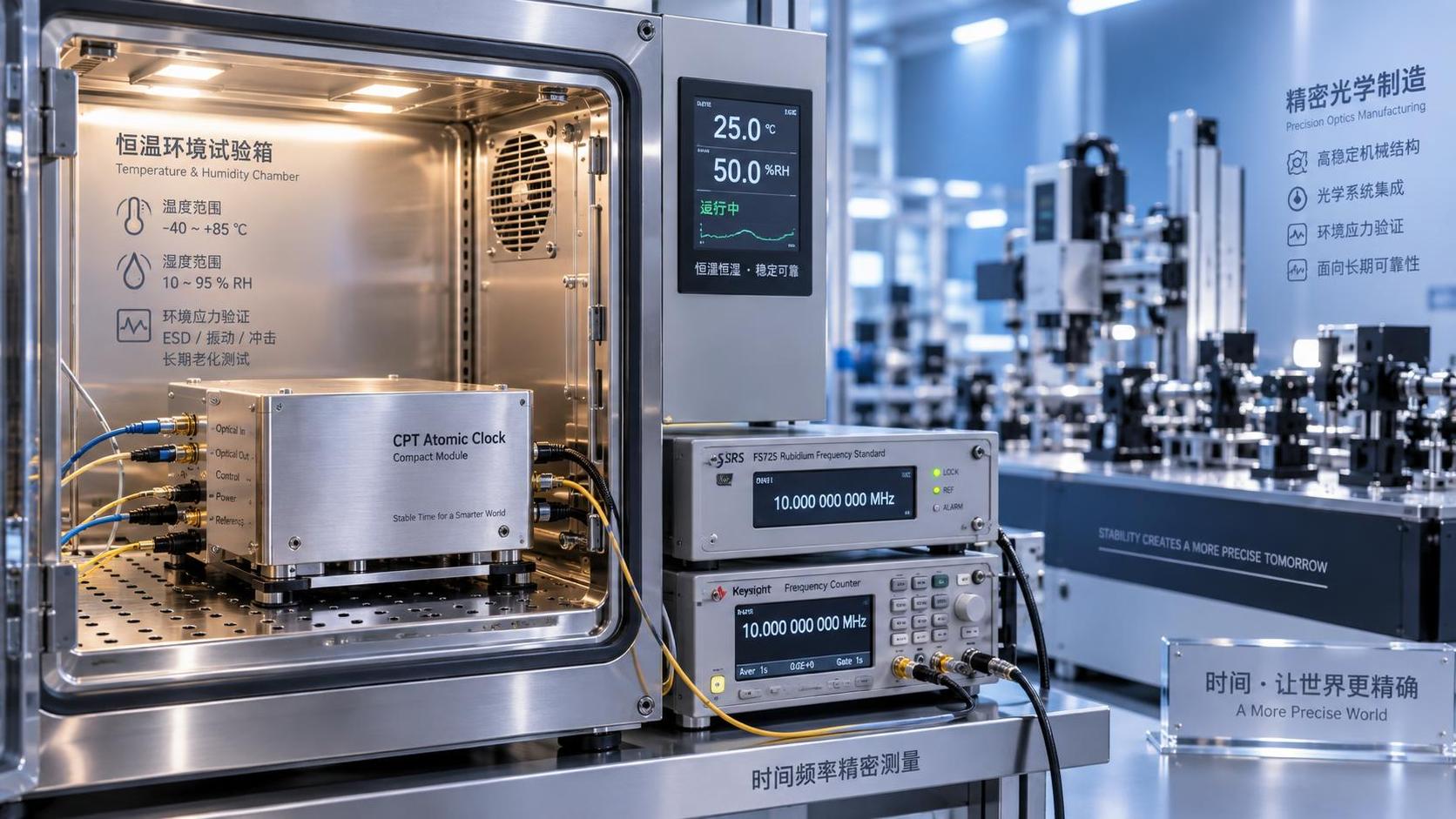
In optical manufacturing equipment, timing is not a background function. It directly affects synchronization, motion coordination, measurement consistency, and long-cycle operational reliability. When project teams plan systems expected to run for many years, short-term cost savings often become secondary to timing stability and maintainability.
Satellite Atomic solutions matter because they provide a highly stable time and frequency reference that supports precision processes across distributed equipment. In facilities where alignment systems, inspection tools, laser processing units, metrology stations, and data collection platforms must work in step, timing errors can create hidden losses long before they trigger visible failures.
For project managers, the value is practical. Better timing architecture helps reduce commissioning delays, lowers synchronization risk during system expansion, and improves confidence in future upgrades. For engineering leaders, it creates a cleaner technical baseline for control systems, diagnostics, traceability, and remote coordination.
- It supports multi-device synchronization in precision optical production lines.
- It improves timing integrity for inspection, calibration, and motion control tasks.
- It reduces the long-term risk of drift, inconsistent logs, and maintenance complexity.
- It creates a scalable infrastructure for future automation, networking, and digitalization.
What project risks appear when timing is treated as a secondary issue?
Many optical manufacturing projects focus heavily on mechanics, optics, software, and throughput targets. Timing is sometimes considered only at the controller or network level. That approach can work in simple setups, but it becomes risky in long-term planning where systems evolve, production lines expand, and uptime requirements tighten.
Without a robust Satellite Atomic foundation, teams may face recurring calibration offsets, event timestamp mismatches, poor correlation between inspection data and machine actions, and more difficult root-cause analysis. These issues are expensive because they consume engineering time and may delay production qualification.
Which optical manufacturing scenarios benefit most from Satellite Atomic timing?
Not every process needs the same timing architecture. However, several optical manufacturing equipment scenarios consistently benefit from Satellite Atomic references because precision, traceability, and stable synchronization directly influence output quality and service life.
The table below helps project managers evaluate where Satellite Atomic has the strongest impact in optical manufacturing environments.
These scenarios show that Satellite Atomic is not limited to aerospace or telecom thinking. In optical manufacturing equipment, it is increasingly relevant wherever precision control and verifiable timing are linked to process quality, service efficiency, or compliance requirements.
Typical equipment nodes that depend on precise timing
- Servo and motion controllers coordinating stages, mirrors, and positioning assemblies.
- Vision and inspection modules that require synchronized image capture and sensor logging.
- Factory data systems that depend on trustworthy event records for troubleshooting and reporting.
- Remote monitoring or multi-site operations where timing consistency supports centralized management.
Satellite Atomic vs conventional timing sources: what should decision makers compare?
Project teams often compare a Satellite Atomic approach with standard oscillator-based timing, network-only synchronization, or lower-cost standalone references. The right choice depends on lifecycle demands, not just initial purchase price. For long-term optical manufacturing systems, the comparison should focus on drift tolerance, holdover behavior, integration complexity, and resilience during signal challenges.
The following table highlights practical evaluation dimensions for planning and procurement discussions.
This comparison does not mean every project must choose the highest-grade architecture. It means teams should map timing strategy to production goals, maintenance realities, and future upgrade plans. In many optical manufacturing deployments, Satellite Atomic offers the best balance between precision assurance and lifecycle control.
When a lower-cost option may still be acceptable
If a system is small, isolated, and not expected to scale, a simpler reference may be enough. The key is to avoid using a low-cost design in a high-growth environment where later migration becomes disruptive. Project managers should ask whether the chosen timing source will still be acceptable after three to five years of operational change.
What technical performance should engineering leaders review before selection?
Technical review should move beyond generic claims such as stable or precise. In optical manufacturing equipment, the decision process benefits from clear performance criteria linked to the real operating environment, network topology, and system maintenance model.
Core performance factors to examine
- Frequency stability over time, especially under temperature variation and continuous industrial operation.
- Holdover capability during temporary satellite signal interruption or network disturbance.
- Output compatibility with the control, measurement, and communication interfaces already used in the line.
- Power consumption, especially for systems designed for efficiency, remote deployment, or thermal sensitivity.
- Security architecture and timing integrity protection in networked industrial environments.
Why low-power and secure design matter in long-term planning
Optical manufacturing facilities are under pressure to improve energy efficiency while increasing process complexity. A low-consumption Satellite Atomic solution reduces not only operating cost but also heat load and cabinet design pressure. This can simplify deployment in dense equipment layouts.
Security also deserves attention. Timing infrastructure is now part of the digital production backbone. If timing references become unreliable or vulnerable to interference, diagnostics, traceability, and machine coordination may all suffer. A secure space-time infrastructure therefore supports both production continuity and operational confidence.
How should project managers build a practical Satellite Atomic procurement checklist?
Procurement teams often face a difficult mix of deadlines, limited budgets, technical uncertainty, and pressure to avoid future regret. A structured checklist helps convert timing selection from a vague discussion into a defendable project decision.
Use the following selection guide when evaluating Satellite Atomic solutions for optical manufacturing equipment.
A good procurement process treats Satellite Atomic as a system-level decision. It should involve automation, controls, quality, and maintenance stakeholders early, rather than leaving timing selection to a single hardware buyer or software engineer.
A simple decision sequence for project teams
- Define which processes depend on synchronization, timestamp integrity, or coordinated triggering.
- Estimate future expansion, including more machines, remote nodes, or tighter digital traceability needs.
- Set realistic requirements for holdover, power, security, and environmental resilience.
- Review supplier capability for technical consultation, customization, and delivery coordination.
What about standards, compliance, and implementation risk?
For optical manufacturing equipment projects, compliance is rarely a single certificate issue. It usually involves a combination of electrical safety expectations, electromagnetic compatibility, industrial communication integrity, and customer-specific acceptance conditions. Timing infrastructure should be selected with these interfaces in mind.
When discussing Satellite Atomic deployment, engineering teams should verify how the solution aligns with commonly relevant industrial practices, such as stable signal distribution, reliable synchronization behavior, and manageable maintenance procedures. This is especially important for exported equipment or systems integrated into larger manufacturing platforms.
Common implementation risks to control early
- Assuming timing accuracy on paper will match installed performance without reviewing environmental conditions.
- Ignoring holdover planning because satellite reception appears stable during early testing.
- Underestimating interface adaptation work between the timing source and legacy machine controls.
- Treating security as separate from timing, even though network integrity directly affects synchronized operations.
How can a specialized time and frequency partner reduce planning pressure?
Project managers do not only need products. They need reliable interpretation of application demands, realistic integration advice, and support that fits delivery schedules. This is where a company focused on high-precision time and frequency products and all-round solutions provides practical value.
With a technical foundation built around advanced time and frequency expertise and backed by SPACEON Electronics, an internationally leading listed time and frequency company, the solution approach is better aligned with the needs of long-cycle industrial systems. That matters when customers need accurate, stable, low-consumption, and safe space-time infrastructure rather than isolated components.
For optical manufacturing equipment, this strength translates into more effective support in areas such as reference architecture discussion, signal compatibility review, low-power deployment planning, and solution adaptation for globally distributed customers. It also helps engineering teams avoid fragmented sourcing that can complicate testing and long-term maintenance.
Where this support is especially useful
- Projects with demanding delivery windows and limited time for repeated integration cycles.
- Systems requiring a balance between timing precision, low power use, and industrial reliability.
- Global deployments where solution consistency and communication efficiency matter.
- Expansion projects where today’s design must support tomorrow’s machine networking and traceability goals.
FAQ: what do project teams ask most about Satellite Atomic?
Is Satellite Atomic only necessary for very large or high-end optical manufacturing systems?
No. It is most valuable wherever timing errors create operational cost, even if the line is not huge. If your system depends on synchronized triggering, measurement correlation, or scalable digital traceability, Satellite Atomic may provide meaningful lifecycle benefits.
What should we prioritize if the budget is limited?
Start with the processes where timing failure causes the highest cost. Then evaluate whether a staged architecture is possible. In many cases, it is smarter to invest in a strong timing core for critical nodes than to deploy a low-grade solution across the whole system and face redesign later.
How does Satellite Atomic help with future expansion?
It establishes a more stable reference layer for added machines, sensors, and data systems. That reduces rework when the production line grows, when remote diagnostics are introduced, or when higher-quality traceability becomes a customer requirement.
What is a common mistake during selection?
A common mistake is judging timing products mainly by initial price or nominal specification, without considering holdover behavior, integration effort, and maintenance impact. In long-term optical manufacturing projects, these hidden factors often determine the real cost of ownership.
Why choose us for Satellite Atomic planning and consultation?
If you are evaluating Satellite Atomic for optical manufacturing equipment, we can support your team from early requirement clarification to solution matching. Our focus is not limited to product supply. We help connect timing performance with actual engineering constraints, delivery targets, and future expansion plans.
You can consult us on specific topics such as parameter confirmation, product selection logic, interface compatibility, low-power deployment considerations, delivery cycle expectations, customized solution design, certification-related questions, sample support, and quotation communication. This is especially useful when your project team must balance precision requirements with schedule pressure and procurement control.
For long-term system planning, Satellite Atomic is not just a component choice. It is part of the infrastructure strategy that shapes reliability, traceability, and upgrade readiness. If your next optical manufacturing project needs a more accurate, stable, and secure time and frequency foundation, a focused technical discussion is the fastest way to reduce uncertainty and move forward with confidence.
CONTACT US
Please use the form below to get in touch.
If you need a reply we will get in touch as soon as possible.

Equity Code 300152