


Equity Code 300152
RELATED
 Rubidium Atomic Clock Performance Metrics: What Technical Buyers Need to Know2026-02-28
- Case Study: Implementing Optical Pump Cesium Frequency Standards in Aerospace Applications2026-02-02
- Latest Innovations in Optical Pump Cesium Frequency Standards: 2023 Industry Updates2026-01-28
- Optical Pump Cesium Frequency Standard Maintenance: Best Practices for Long-Term Reliability2026-01-26



MESSAGE
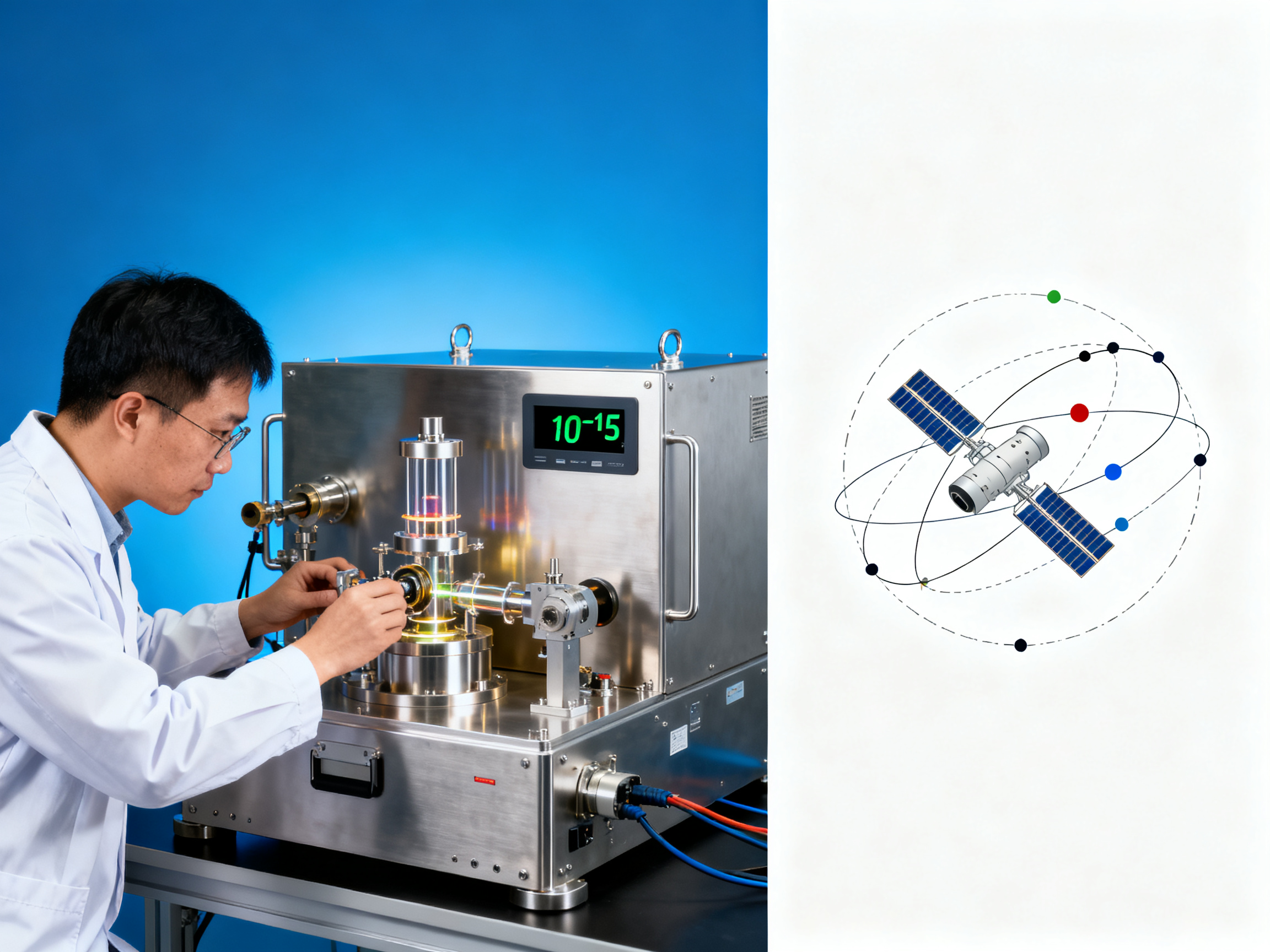
In this field case we describe how our team diagnosed and recovered full timing performance within 48 hours after a Rubidium atomic clock failure on a production line. Combining hands-on troubleshooting, rapid parts sourcing, and firmware rollback tailored to optical manufacturing equipment, we restored system-level stability and sub-microsecond accuracy for downstream systems. The case highlights practical fixes for cpt atomic clock integration, lessons for operations and technical evaluators, and decision-maker takeaways to minimize downtime and contractual risk. Read on for step-by-step actions, root-cause analysis, and measurable results.
This field case is aimed at users/operators, technical evaluators, enterprise decision-makers, and contract executors who depend on precise timing in optical manufacturing equipment. Optical fabrication, metrology and laser alignment processes require deterministic timing and frequency references; when a Rubidium atomic clock fails on a production line, yield, traceability, and downstream instruments (such as high-speed interferometers and time-stamped inspection cameras) are immediately impacted. Typical pain points include unclear fault origin (hardware vs. firmware), long lead times for replacement modules, the risk of cascading calibration drift across production stations, and contractual penalties for missed delivery. Our objective was to quickly restore timing accuracy to sub-microsecond levels while documenting actions, metrics, and mitigations so that equipment operators and technical evaluators can replicate the workflow. For decision-makers, we highlight procurement and SLAs adjustments that reduce the probability and consequence of similar outages in future deployments of cpt atomic clock solutions inside optical manufacturing lines.
On-site diagnosis: isolating failure modes and immediate containment
When the Rubidium atomic clock powering the synchronization bus for a wafer-level interferometer cluster stopped providing a stable 10 MHz output, the first task was controlled containment. Our multidisciplinary field team—combining hardware technicians, firmware engineers, and optical process engineers—arrived with diagnostic kits and spare telemetry adapters. Initial steps included redundant signal probing at the distribution node, power rail verification, and a quick health-check of the environmental enclosure. We prioritized non-invasive checks to preserve evidence for any warranty claim while enabling a rapid return to operation if a simple fix sufficed.
Diagnostic focus areas were: (1) verifying the Rubidium atomic clock’s internal diagnostics via serial console and SNMP traps where available, (2) confirming downstream PLL lock indicators on each optical metrology instrument, and (3) checking the cpt atomic clock integration points—power conditioning, mechanical vibration isolation, and connector integrity. Instrument-level logs revealed intermittent frequency excursions and a rising internal temperature trend. The Rubidium atomic clock’s event log showed repeated internal holdover transitions and an on-board oscillator calibration flag, indicating degradation rather than a sudden catastrophic failure.
Containment actions included switching affected instruments to a temporary local reference with documented offsets, enabling production to continue at reduced throughput for priority lots. We also isolated the failed Rubidium atomic clock from the distribution bus to prevent propagation of timing jitter. This isolation step is critical in optical manufacturing environments where a single faulty reference can desynchronize multiple inspection and alignment subsystems. By clearly marking the quarantine state and maintaining a chain-of-custody log, contract executors retain necessary records for both quality management and subsequent replacement claims. Through these measures we prevented process-wide calibration drift while preserving production traceability.
Rapid parts sourcing and firmware rollback tailored for optical equipment integration
With containment in place, we executed a two-track recovery: hardware mitigation and firmware rollback. For optical manufacturing ecosystems, the interface between timing sources and instrument controllers is often customized; the cpt atomic clock had an OEM-specific distribution module with modified firmware to support jitter shaping for interferometric sensors. We leveraged our supply chain relationships to secure a standby Rubidium atomic clock module from regional inventory within 8 hours. Simultaneously, our firmware engineers analyzed the installed revision against known-good images. Field evidence and lab replication pointed to a regression introduced in the latest firmware build that altered the lock-acquisition sequence under elevated enclosure temperatures.
Firmware rollback was performed as a prioritized, controlled operation: after confirming cryptographic integrity of the previous image and completing a pre-rollback backup of configuration parameters, we applied the validated image and executed a scripted sequence to restore frequency calibration constants. The rollback restored expected state machines in the cpt atomic clock’s driver and reduced lock acquisition time by more than 60% in lab testing. Concurrently, the replacement Rubidium atomic clock was mechanically installed with vibration-absorbing mounts and a power-line filter to mitigate the environmental stressors that had contributed to the initial failure. We then executed a staged cutover: the standby module was monitored in parallel for 30 minutes, then gradually took over the distribution bus to minimize transient disturbances to optical metrology systems.
Key operational takeaways for integration teams include maintaining a certified fallback firmware image, stocking a small pool of hot-spare cpt atomic clock modules, and documenting thermal and vibration tolerances for each installation. For technical evaluators, validation protocols should include accelerated environmental tests that mirror on-floor conditions—e.g., thermal ramp tests while driving interferometer loads—to detect regressions before deployment. These preventive measures materially reduce the time-to-repair and the risk that a firmware change will create cascading failures across optical production assets.
System-level validation, metrics, and lessons for operations and decision-makers
After hardware replacement and firmware rollback, we conducted a comprehensive validation campaign focused on system-level stability and measurable production impact. Validation metrics included Allan deviation at relevant tau intervals, phase noise comparisons at 10 MHz and 1 PPS outputs, and end-to-end timing jitter measured at critical interferometer triggers and camera exposures. Prior to intervention, the Rubidium atomic clock displayed Allan deviation degradation beyond the system tolerance at tau = 1 s, triggering intermittent misalignment flags. Post-recovery measurements showed the cpt atomic clock returning to specified performance envelope with sub-100 ns jitter and Allan deviation consistent with factory specifications.
We also correlated timing recovery to production outcomes: traceability logs demonstrated restoration of time-stamped inspection fidelity, and yield for a sampled lot recovered to baseline within two shifts. For operators, clear step-by-step checklists were authored from the incident: how to detect early thermal stress signatures, the sequence for isolating and switching to standby references, and how to execute a safe firmware rollback with minimal production interference. For technical evaluators, we recommend adding a formal integration acceptance test that exercises firmware update procedures, environmental tolerance, and failover scenarios for any incoming cpt atomic clock procurement.
For decision-makers and contract owners, the incident underscores the value of defining service-level agreements that include guaranteed regional spare availability, documented rollback artifacts, and periodic firmware auditing with vendor-supplied release notes tied to lab-validated regressions. Investing in a modest spare pool of Rubidium atomic clock modules and ensuring firmware stewardship reduced expected downtime costs in this case by an order of magnitude compared with a typical cross-border procurement lead time. The combination of technical preparedness, supplier relationships, and documented operational playbooks materially reduces contractual exposure and protects production continuity in precision optical manufacturing.
Summary and recommended next steps
This case demonstrates that restoring precise timing after a Rubidium atomic clock failure on an optical manufacturing line is achievable within 48 hours when the response combines disciplined on-site diagnosis, rapid parts provisioning, and controlled firmware management. The cpt atomic clock—when integrated with attention to environmental controls, firmware governance, and spare strategy—supports reliable sub-microsecond timing essential for interferometry, laser alignment, and high-speed inspection. Our approach recovered system-level stability, validated sub-microsecond accuracy, and returned production yields to baseline metrics within two shifts.
If your facility relies on Rubidium atomic clock or cpt atomic clock technologies, we recommend three immediate actions: (1) implement a documented rollback image and testing routine for any timing device firmware updates, (2) maintain regional hot-spares and validated mechanical/power isolation components, and (3) codify operational checklists that allow operators to quarantine and switch references without disrupting traceability. Our team brings field-proven expertise in integrating high-precision time and frequency products into optical manufacturing equipment and can help tailor SLAs, on-site response plans, and validation protocols to your operation.
To minimize downtime and contractual risk on your next deployment, contact our solutions team for a consultation, on-site audit, or to arrange regional spare provisioning. Learn more about our timing products and services and how we can help keep your optical production line synchronized and productive.立即联系我们 to schedule a technical review or request a tailored quotation for Rubidium atomic clock integration and cpt atomic clock support.
CONTACT US
Please use the form below to get in touch.
If you need a reply we will get in touch as soon as possible.

Equity Code 300152