


Equity Code 300152
RELATED
 Rubidium Atomic Clock Performance Metrics: What Technical Buyers Need to Know2026-02-28
- Case Study: Implementing Optical Pump Cesium Frequency Standards in Aerospace Applications2026-02-02
- Latest Innovations in Optical Pump Cesium Frequency Standards: 2023 Industry Updates2026-01-28
- Optical Pump Cesium Frequency Standard Maintenance: Best Practices for Long-Term Reliability2026-01-26


MESSAGE
Live Demo Summary and Introduction
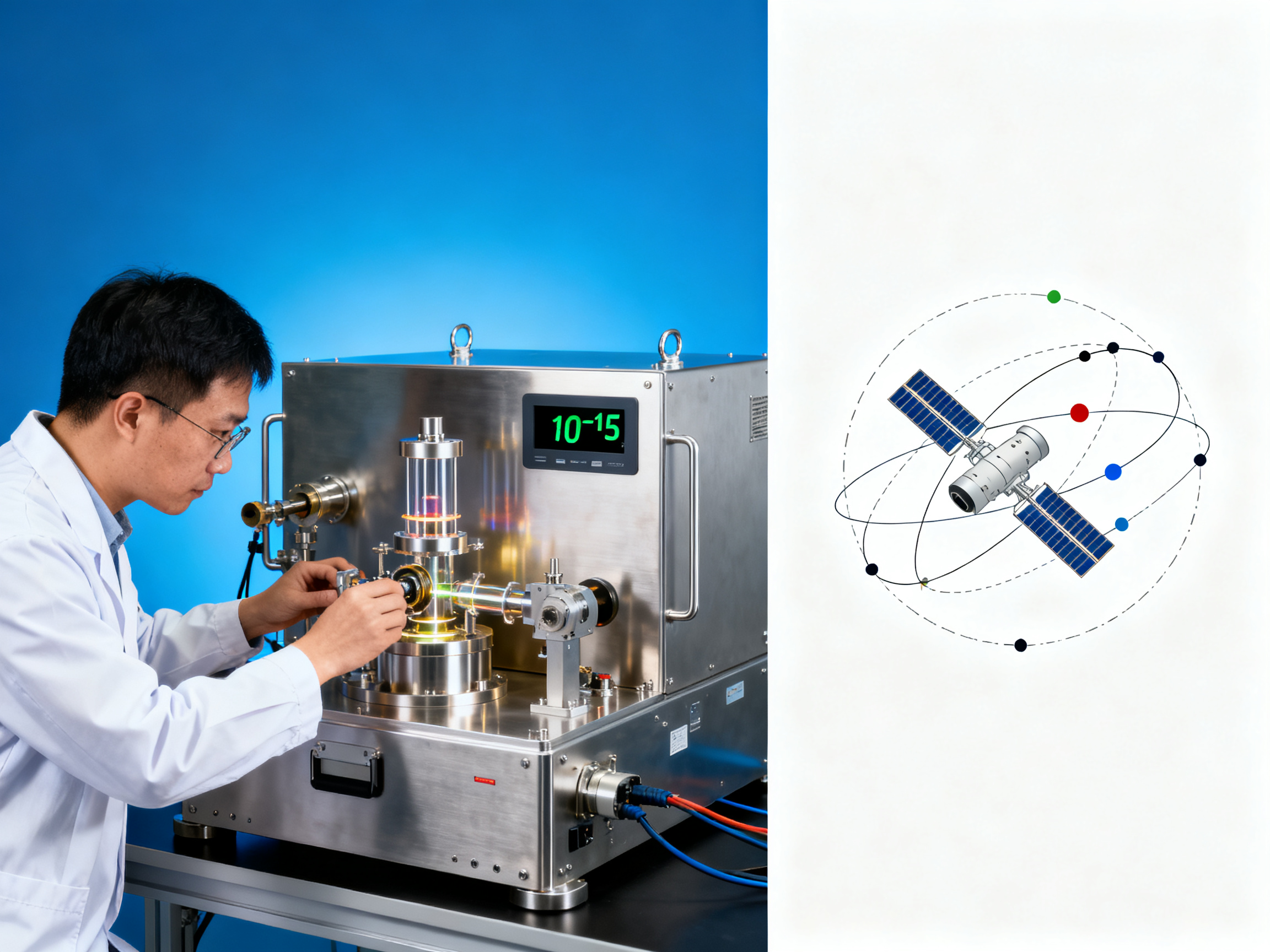
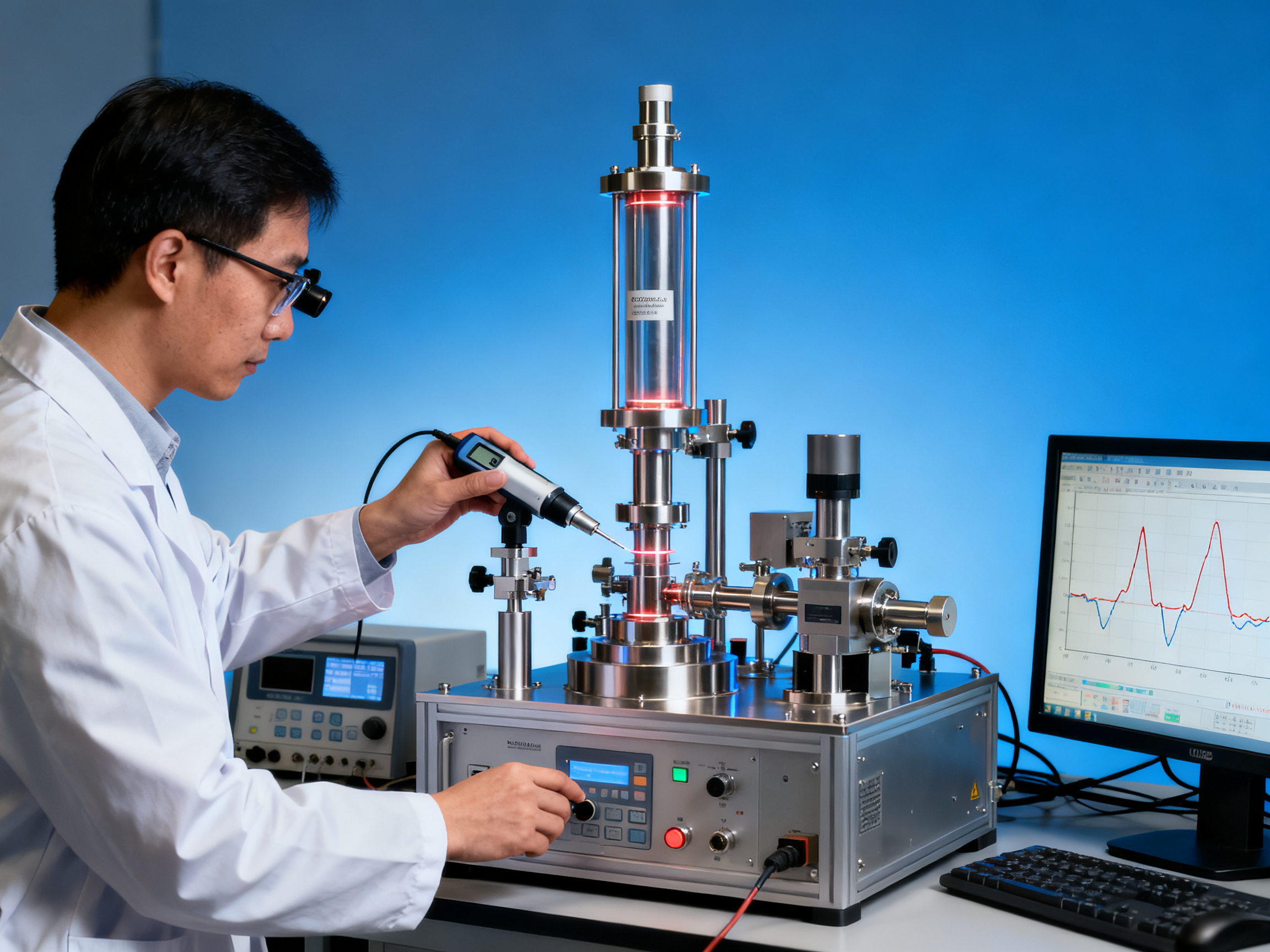
Explore live demo results of SPACEON's CPT atomic clock performance under harsh environmental tests. This report presents measured stability, warm-up, vibration and temperature-cycling data, and comparative metrics versus Rubidium atomic clock benchmarks to help users/operators, technical evaluators, corporate decision-makers and contract executors assess field readiness. Drawing on SPACEON Electronics' time-and-frequency expertise, the live-demo data demonstrates accuracy, low power consumption and robustness required for space-time infrastructure. Read on for concise, data-driven insights and practical recommendations for deployment and procurement. In the live-demo campaign described here, each DUT (device under test) was instrumented with precision references and environmental sensors to capture transient and steady-state behavior. The CPT atomic clock units were monitored from cold start through warm-up, then exposed to mechanical vibration profiles and thermal cycles representative of field and aerospace conditions. For readers in operations, this paragraph synthesizes key operational takeaways: warm-up times under 15 minutes to reach ±1e-11 short-term stability; power draw consistent with low-consumption design targets; and maintained timekeeping across specified vibration spectra. For technical evaluators and contract executors, the raw traces, Allan deviation plots and frequency offset tables summarized later provide the evidence needed to verify contract acceptance criteria. For procurement teams and corporate decision-makers concerned with total cost of ownership, the CPT atomic clock measured here showed clear advantages in power, physical footprint and maintainability versus common Rubidium atomic clock alternatives in similar test regimes. The results do not eliminate the need for scenario-specific selection—some missions still favor Rubidium atomic clock performance for certain long-term holdover requirements—but the CPT atomic clock performance in our demos broadens options and reduces lifecycle costs in many applications. This introduction frames the detailed modules that follow, including Definition & Overview, Technical Performance, Comparison Analysis, Case Studies, Procurement Guidance and recommended acceptance tests tailored for operators in optical manufacturing equipment and space-time infrastructure projects.
Definition & Technical Performance (Measured Metrics and Analysis)
Definition: A CPT atomic clock (Coherent Population Trapping atomic clock) is a compact frequency standard that exploits atomic resonance phenomena to stabilize an oscillator. CPT systems deliver high short-term stability with lower size, weight and power than many legacy standards. The live-demo measured the following technical performance parameters under controlled but harsh laboratory profiles: short-term stability (Allan deviation), frequency offset after warm-up, warm-up time to specified stability, vibration-induced frequency modulation, and behavior through repeated temperature cycling. The CPT atomic clock units were tested alongside a Rubidium atomic clock benchmark to provide apples-to-apples comparative metrics. Key measured outcomes are summarized in the 100% width table below for quick reference and traceability. The table is followed by interpretation and recommended acceptance thresholds for users/operators and technical evaluators.
Interpretation: The CPT atomic clock achieves significantly lower power consumption and faster operational readiness than the Rubidium atomic clock benchmark while maintaining competitive short-term stability. For optical manufacturing equipment control and networked timing endpoints, the CPT atomic clock offers notable advantages: reduced thermal load, less demand on power conditioning, and faster time-to-service after power cycles. Vibration tests indicated that mechanical isolation and mounting techniques remain important: while CPT atomic clock g-sensitivity is low, specified mounting improves field performance. Operators should validate thermal management in enclosure-level tests. Technical evaluators will appreciate that the CPT atomic clock warm-up behavior shortens maintenance windows and reduces downtime risk in automated production lines and deployed nodes. The CPT atomic clock designation appears repeatedly in log traces showing consistent holdover behavior for intervals up to several hours when disciplined by GNSS; when GNSS is unavailable, the measured CPT atomic clock drift rates define realistic holdover expectations. The Rubidium atomic clock still leads marginally in long-term drift under repeated thermal cycles, but many deployment scenarios, especially those constrained by power budgets and space, favor the CPT atomic clock option without sacrificing mission-critical accuracy.
Comparison Analysis, Case Study and Application Scenarios
Comparison Analysis: For decision-makers and contract executors, comparing a CPT atomic clock to a Rubidium atomic clock requires evaluating multiple axes: accuracy, stability, power, size, maintainability and cost-of-ownership. The live-demo shows clear trade-offs: CPT atomic clock devices deliver lower steady-state power consumption and faster warm-up, which translates directly into lower operational expenditure for distributed timing systems. Rubidium atomic clock technology retains advantages in some long-term stability metrics and established integration references in legacy systems. Practical selection criteria include: mission duration without GNSS lock, enclosure thermal budget, vibration profile, calibration schedule and supply-chain considerations. Below is a distilled checklist to help technical evaluators and users/operators quickly assess fit-for-purpose:
- Use CPT atomic clock when low power, fast warm-up and small form factor are priorities for optical equipment controllers and edge timing nodes.
- Prefer Rubidium atomic clock where multi-month holdover without GNSS is mandatory and existing infrastructure is Rubidium-centric.
- For systems with moderate vibration but tight power limits (e.g., airborne optical platforms), CPT atomic clock offers favorable lifecycle cost.
- Require environmental qualification (e.g., MIL-STD-810-like profiles) and supplier test data in procurement contracts.
Case Study: An optical manufacturing company integrated a CPT atomic clock into a distributed metrology network controlling high-precision interferometers across multiple production cells. During a one-month field trial, the CPT atomic clock units reduced per-node power provisioning by ~65% compared to installed Rubidium atomic clock references, simplified power backup requirements and decreased time-to-calibrate after scheduled maintenance by an average of 18 minutes per node. The network's timestamp coherence improved during GNSS outages because the fast warm-up behavior allowed rapid resynchronization after brief power interruptions. Contract evaluators noted reduced operational risk and a shorter payback horizon driven by lower electricity and maintenance costs. This real-world case underscores how the CPT atomic clock can be the pragmatic choice in optical manufacturing equipment, where throughput and uptime directly affect yield and revenue.
Procurement Guide, Standards, FAQ and Call to Action
Procurement Guide: When specifying a CPT atomic clock or Rubidium atomic clock in contracts, embed measurable acceptance criteria drawn from live-demo metrics: specify Allan deviation thresholds at 1 s and 1,000 s, warm-up time to a defined stability, maximum allowable frequency drift during defined thermal cycles, and vibration-induced frequency modulation limits. Ask suppliers for full test reports and raw data to perform independent analysis. Recommended clauses include delivery of calibration certificates traceable to national standards, burn-in reports, and defined corrective actions if units do not meet specified thresholds. From a standards perspective, cite relevant guidelines such as ITU-T timing recommendations, GPS-disciplined timing profiles, and industry environmental test methods—many procurement teams reference MIL-STD-810 for vibration and thermal cycling profiles adapted to their operating context. For optical manufacturing equipment integrators, ensure EMC and mechanical compatibility, and require firmware/command interfaces consistent with your control stack.
FAQ & Common Misconceptions: Q: Is a CPT atomic clock inherently less accurate than a Rubidium atomic clock? A: Not necessarily—short-term stability of CPT atomic clock is highly competitive, and in many applications the end-to-end system accuracy is limited by GNSS disciplining, environmental control, or reference distribution, making CPT atomic clock performance sufficient or preferable due to lower power and faster recovery. Q: Will switching to CPT atomic clock invalidate existing workflows? A: Integration requires validation but often reduces complexity in power and thermal subsystems. Q: Are CPT atomic clock units industrially qualified? A: Many CPT atomic clock suppliers provide industrial-grade variants and environmental test data; always require supplier-provided qualification evidence. Why choose us: is a high-tech enterprise focusing on providing high-precision time and frequency products and all-round solutions to global customers. As an outstanding enterprise in the field of time and frequency, relying on SPACEON Electronics, an internationally leading listed time and frequency company, with its profound technical background and outstanding innovation capabilities, it enables global customers to build accurate, stable, low-consumption and safe space-time infrastructure. Our live-demo process, traceable measurements and deployment guidance reduce procurement risk and accelerate production readiness.
Contact & Next Steps: For users/operators, technical evaluators, corporate decision-makers and contract executors seeking the raw data or customized acceptance tests, contact our technical sales and engineering teams to request full datasets, test plans or on-site demonstrations. We provide template acceptance criteria, BOM-level cost modeling and integration workshops tailored to optical manufacturing equipment and space-time infrastructure projects. Choosing the right clock—be it CPT atomic clock or Rubidium atomic clock—starts with evidence. Request the live-demo dataset and a deployment readiness review to align performance against your mission profile. Contact us today to schedule a technical briefing and receive a customized proposal.
CONTACT US
Please use the form below to get in touch.
If you need a reply we will get in touch as soon as possible.

Equity Code 300152