


Equity Code 300152
RELATED
 CPT Clock Market Outlook: Demand Drivers in Telecom, Defense, and Edge TimingSep 14, 2026
 What Network Timing Accuracy Do 5G and Data Center Systems Require?Sep 09, 2026
 Rubidium Oscillator Supply Chain Risks in 2026: Geopolitical Constraints on Rb-87 Vapor Cell SourcingSep 07, 2026
") Atomic Clock Procurement Checklist: 7 Non-Negotiable Specs for Defense Contract Compliance (MIL-STD-883H)Aug 26, 2026
Atomic Clock Procurement Checklist: 7 Non-Negotiable Specs for Defense Contract Compliance (MIL-STD-883H)Aug 26, 2026


MESSAGE
Satellite Atomic errors often begin with small, overlooked issues in installation, calibration, power stability, or signal synchronization.
In optical manufacturing equipment, those small faults can quickly become timing drift, unstable motion control, inspection mismatch, or data inconsistency.
When ultra-precise exposure, alignment, polishing, coating, and metrology depend on exact timing, Satellite Atomic performance becomes part of production quality.
This guide explains where Satellite Atomic problems usually start, how to identify them early, and what practical steps reduce downtime and accuracy loss.
What does Satellite Atomic mean in optical manufacturing equipment?
Satellite Atomic refers to a high-precision time and frequency reference using satellite signals and atomic timing stability.
It supports synchronized clocks, deterministic control, event timestamping, and stable frequency output across complex optical production systems.
In optical manufacturing equipment, timing errors affect laser triggering, axis coordination, sensor fusion, interferometric measurement, and process traceability.
A Satellite Atomic source is valuable because it combines long-term accuracy with short-term stability and resilient timing distribution.
That matters in environments where nanometer-scale tolerances and repeatable cycles must stay consistent across shifts and production lines.
Why is timing so sensitive in this industry?
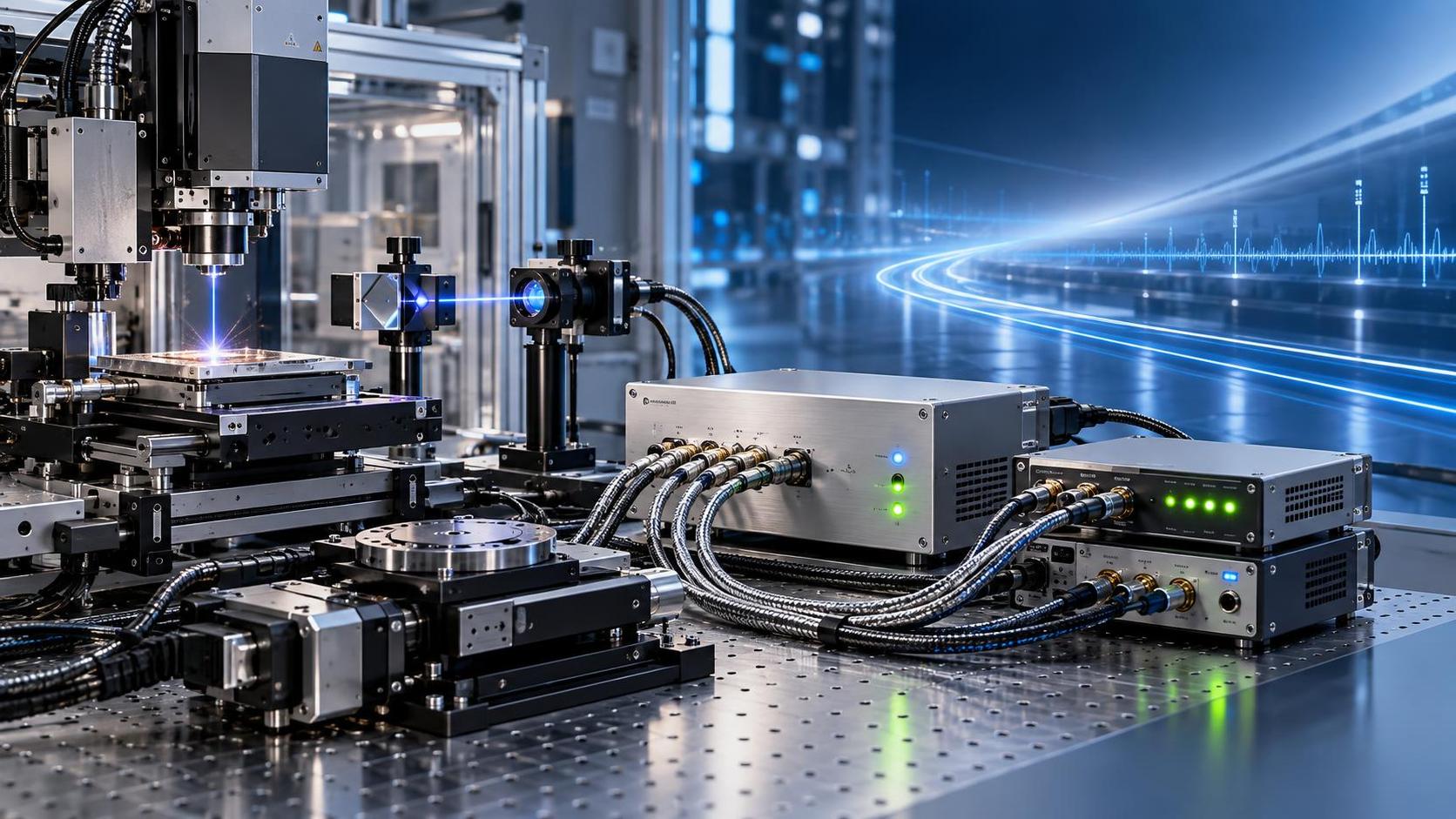
Optical manufacturing equipment often links motion stages, cameras, lasers, PLCs, and measurement subsystems into one synchronized process.
If one clock drifts, process windows shift.
This can lead to edge defects, coating thickness deviation, inspection errors, or unstable production records.
Which installation issues cause Satellite Atomic errors most often?
Many Satellite Atomic faults do not start inside the timing unit.
They start with installation choices that weaken signal quality, grounding integrity, or environmental protection.
1. Antenna placement is blocked or noisy
Satellite Atomic systems need clean satellite reception.
Nearby metal structures, rooftop equipment, or reflective surfaces can create multipath interference and unstable lock conditions.
In industrial campuses, EMI sources can also degrade reception quality.
2. Cable loss is underestimated
Long RF cable runs reduce signal strength.
If cable type, connector quality, or amplifier planning is ignored, Satellite Atomic lock becomes inconsistent.
Intermittent timing quality then appears as a software issue, even when the root cause is physical attenuation.
3. Grounding and shielding are incomplete
Poor grounding allows noise injection into timing outputs and communication interfaces.
That is especially risky near servo drives, high-speed spindles, switching power supplies, and laser power modules.
4. Temperature and vibration are ignored
Satellite Atomic equipment performs best within controlled temperature ranges.
Excess heat, airflow instability, or machine vibration can affect oscillator behavior and connection reliability.
- Verify clear sky view before antenna mounting.
- Calculate RF loss before fixing cable length.
- Separate timing cables from strong power lines.
- Use proper surge protection and grounding points.
How do calibration and synchronization mistakes create Satellite Atomic drift?
A stable Satellite Atomic source can still produce bad results if downstream calibration and synchronization are mismatched.
This is common when equipment expansions happen over time.
Reference output settings may not match device requirements
Some optical manufacturing equipment expects specific pulse formats, voltage levels, or frequency references.
If the Satellite Atomic output is configured incorrectly, the device may still run but with hidden timing offset.
Internal clocks may keep free-running too long
Controllers sometimes continue using local clocks after synchronization loss.
That creates gradual drift across vision systems, inspection logs, and coordinated axes.
Time protocol settings are often inconsistent
A Satellite Atomic source may feed NTP, PTP, 1PPS, or 10 MHz references.
If delay compensation, priority hierarchy, or holdover settings differ, synchronization quality drops.
For optical manufacturing equipment, calibration should include not only the timing source but also every receiving subsystem.
That includes motion control, machine vision, test instruments, MES timestamps, and event logging devices.
Can power instability trigger Satellite Atomic problems?
Yes. Power quality is one of the most underestimated causes of Satellite Atomic errors.
Voltage dips, ripple, sudden restarts, and noisy DC rails can interrupt locking, degrade oscillator stability, or corrupt timing distribution.
Common power-related warning signs
- Frequent loss and recovery of satellite lock.
- Unexplained time jumps after machine startup.
- Higher timing error during peak equipment load.
- Different performance between day and night shifts.
Optical manufacturing lines often include motors, chillers, vacuum units, and high-frequency drivers.
These loads can inject electrical noise into shared power paths.
A dedicated, filtered, and monitored power supply for Satellite Atomic equipment reduces these risks significantly.
Why holdover capability matters
When external signals drop, holdover keeps the Satellite Atomic output stable for a defined period.
In optical manufacturing equipment, strong holdover prevents sudden process discontinuity during temporary satellite or power disturbances.
How can users tell whether a Satellite Atomic issue is minor or critical?
The best approach is to classify symptoms by impact, duration, and spread across systems.
A small alarm is not always harmless, and a stable display is not always proof of healthy timing.
If the issue affects measurement repeatability, coordinated motion, or traceable timestamps, treat it as critical.
If it appears once without process impact, monitor closely but investigate root causes quickly.
What is the best way to prevent Satellite Atomic errors before production is affected?
Prevention works best when design, installation, monitoring, and maintenance follow one timing strategy.
Satellite Atomic reliability should be planned as infrastructure, not treated as a small accessory.
Build a practical prevention checklist
- Define required timing accuracy for each optical process.
- Choose Satellite Atomic outputs that match all connected devices.
- Validate antenna position, RF path, and surge protection.
- Separate timing power from high-noise industrial loads.
- Enable alarm thresholds for lock, drift, and holdover status.
- Review synchronization logs after maintenance or equipment expansion.
High-precision time and frequency specialists can also help align system architecture with long-term production goals.
This becomes increasingly important as optical manufacturing equipment grows more automated, connected, and quality-data driven.
Implementation and lifecycle considerations
Initial deployment cost is only one factor.
Long-term stability, holdover performance, maintenance visibility, and integration flexibility often deliver greater value.
A robust Satellite Atomic solution reduces hidden quality loss, troubleshooting time, and unscheduled line interruptions.
FAQ: quick answers about Satellite Atomic issues
Satellite Atomic errors often begin quietly, but their impact on optical manufacturing equipment can become expensive very quickly.
Installation detail, calibration discipline, clean power, and reliable synchronization form the core of prevention.
A high-tech enterprise focused on precise time and frequency products can support accurate, stable, low-consumption, and safe space-time infrastructure for global applications.
The next step is practical: review your current Satellite Atomic setup, map timing dependencies, and correct small weaknesses before they interrupt production.
CONTACT US
Please use the form below to get in touch.
If you need a reply we will get in touch as soon as possible.

Equity Code 300152