


Equity Code 300152
RELATED
 Optical Cesium vs Rubidium Atomic Clocks for High-Accuracy Timing ProjectsOct 19, 2026
 How CPT Atomic Clocks Deliver Low-Power Timing for Portable Field SystemsOct 12, 2026
 CPT Atomic Clock Drift: Diagnosing Temperature, Light, and Magnetic Field EffectsSep 28, 2026
 CPT Atomic Clock Qualification Tests for Stability, Aging, and Environmental StressSep 22, 2026
MESSAGE
In precision timing applications, a cpt atomic clock can solve more drift than many engineers expect, delivering stable frequency control in compact, low-power systems.
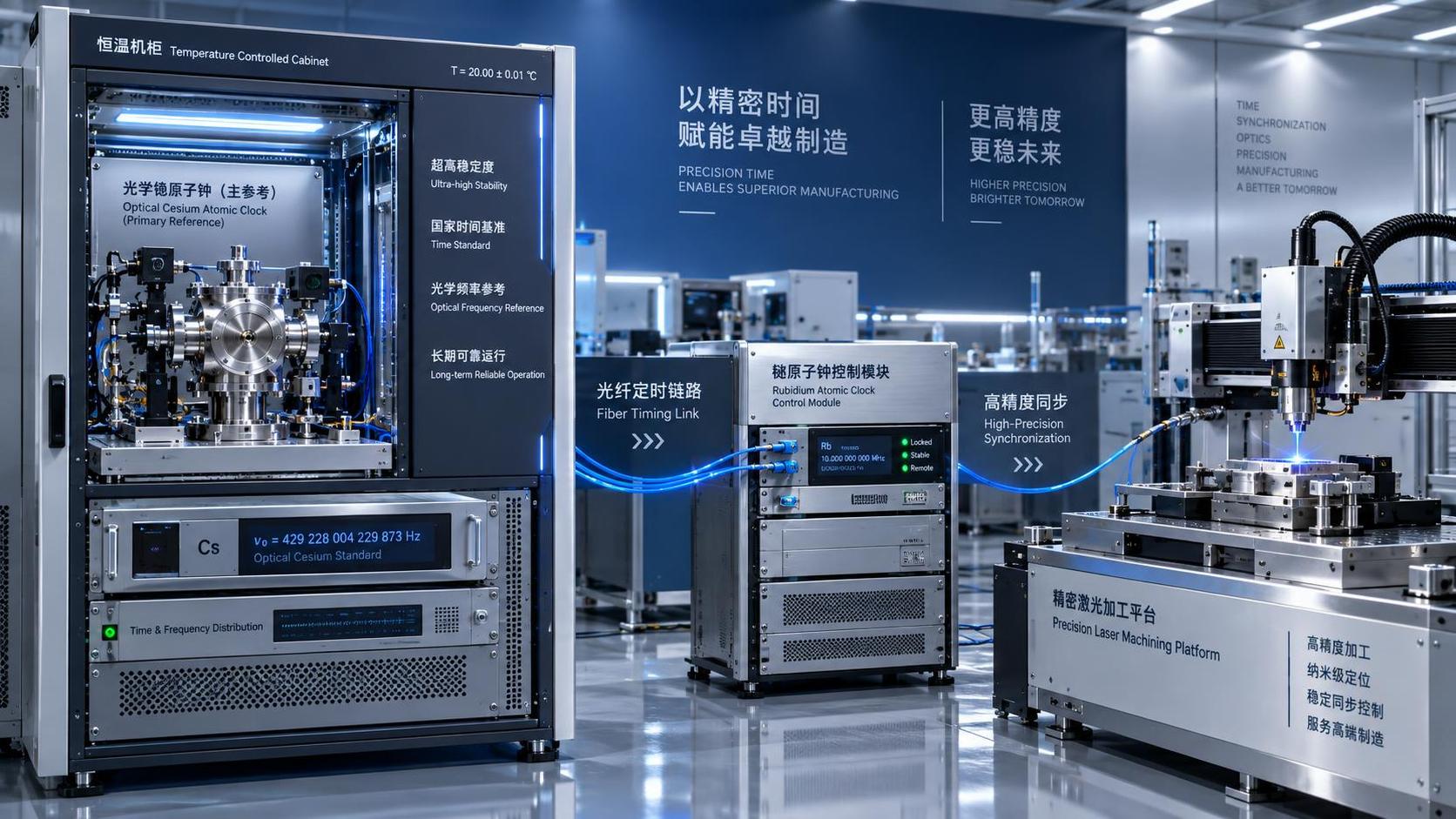
Within optical manufacturing equipment, timing stability affects laser triggering, motion coordination, inspection accuracy, and long-term process repeatability.
When frequency drift accumulates, even excellent optics and mechanics may produce inconsistent results, lower yield, or harder traceability.
A high-performance cpt atomic clock helps build accurate, stable, low-consumption, and secure space-time infrastructure for demanding industrial systems.
Backed by advanced time and frequency expertise, modern suppliers now provide integrated solutions that fit compact equipment and larger synchronized production environments.
When optical manufacturing equipment needs more than quartz stability
Many systems begin with crystal oscillators because they are affordable, familiar, and easy to integrate.
However, optical manufacturing equipment often operates under temperature variation, vibration, long duty cycles, and strict synchronization requirements.
In these conditions, a quartz source may drift enough to affect timing windows, phase alignment, or timestamp consistency.
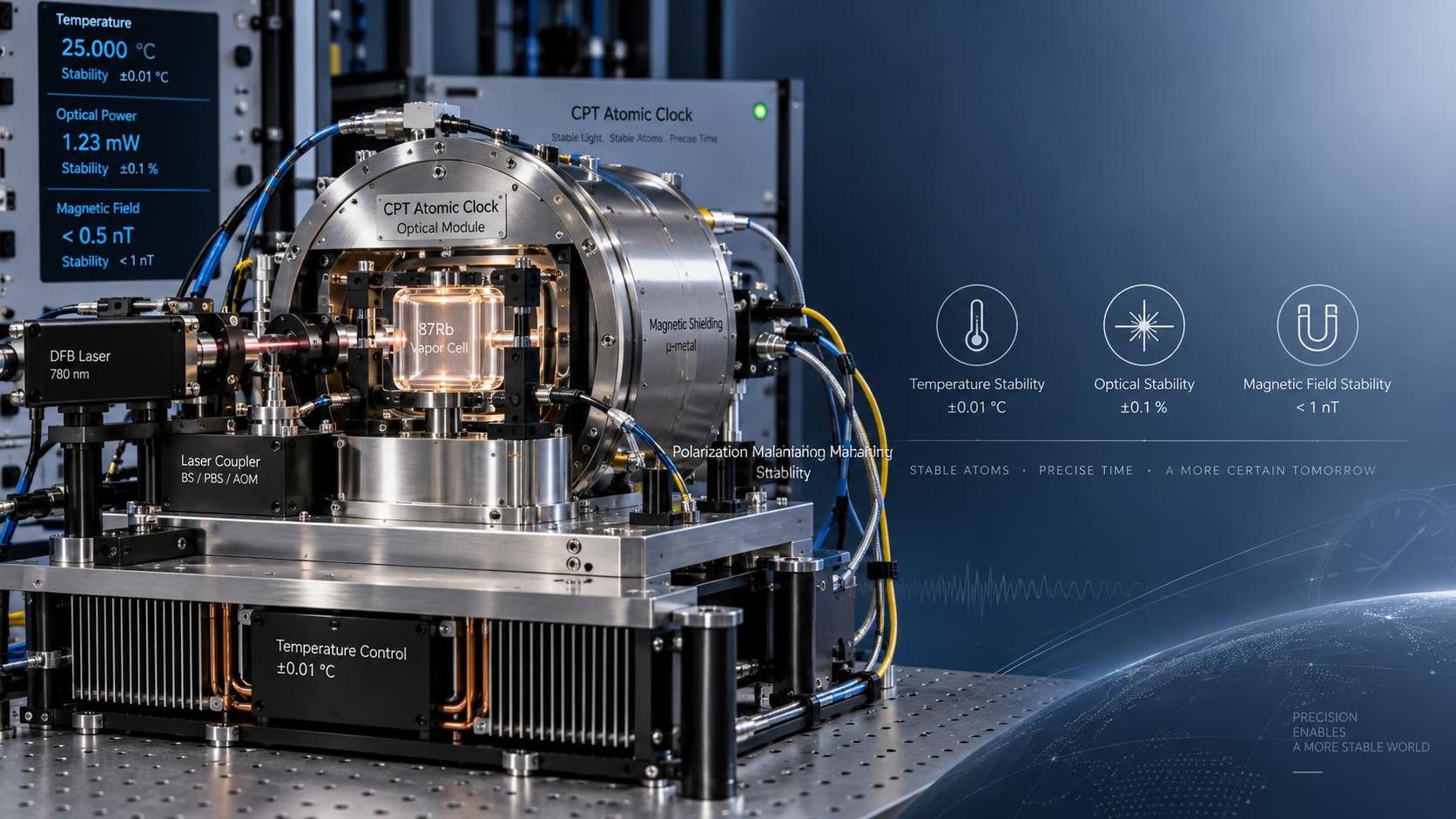
A cpt atomic clock offers a different path by referencing atomic transitions rather than relying only on resonator behavior.
That difference matters most where precise coordination between optics, electronics, and software determines production quality.
Why drift becomes a hidden production cost
Drift rarely appears as a single dramatic failure.
Instead, it slowly changes trigger timing, scan intervals, measurement references, and synchronization across modules.
The result may include recalibration frequency increases, more process tuning, inconsistent inspection data, and reduced confidence in long unattended runs.
For equipment builders, this can turn into service complexity and harder performance guarantees.
Scenario one: laser micromachining lines with strict pulse coordination
Laser micromachining depends on precise coordination between pulse generation, beam steering, stage motion, and sensing.
A small timing offset may alter spot placement, edge quality, or thermal impact on sensitive materials.
Here, a cpt atomic clock supports stable timing references for control boards, synchronization modules, and distributed subsystems.
Its value grows when the equipment runs continuously and cannot tolerate frequent manual timing correction.
Core judgment points in this scenario
- Pulse timing stability directly influences machining consistency.
- Distributed control architecture increases synchronization risk.
- Long operation periods amplify drift-related deviation.
- Low power and compact integration remain important design constraints.
Scenario two: optical inspection platforms requiring trusted timestamps
Inspection systems often combine cameras, interferometers, motion stages, and data acquisition hardware.
These components must align in time if measurement results are to remain traceable and repeatable.
A cpt atomic clock can reduce frequency drift that would otherwise blur correlations between image capture, scan position, and event logging.
This becomes critical when comparing measurements across shifts, tools, or facilities.
What matters most for inspection timing
The timing source must remain stable without frequent external adjustment.
It should support accurate timestamps during network disturbances or isolated operation.
It also needs to fit compact instrument designs without adding excessive thermal burden.
Scenario three: distributed optical production cells that must stay synchronized
Modern optical manufacturing often uses distributed production cells rather than one isolated machine.
In such environments, local timing quality affects workflow coordination, event ordering, and maintenance analysis.
A cpt atomic clock provides a strong local holdover source when external synchronization becomes unstable or temporarily unavailable.
That holdover performance helps preserve operational continuity and data integrity.
Key fit indicators in distributed systems
- Multiple nodes require coherent timing behavior.
- Temporary GNSS loss or network variation must not disrupt production.
- Maintenance teams need reliable event sequence reconstruction.
- Space and energy budgets still limit component selection.
How scenario needs differ when choosing a cpt atomic clock
Practical adaptation advice for optical manufacturing equipment
The best timing architecture depends on where drift creates measurable business impact.
A cpt atomic clock should be evaluated as part of the full control and measurement chain, not as an isolated part.
- Map every timing-sensitive function, including laser triggers, encoder capture, imaging, and event logs.
- Identify where holdover matters most during external reference loss.
- Compare thermal conditions, vibration exposure, and available board space.
- Review interface compatibility with synchronization and control modules.
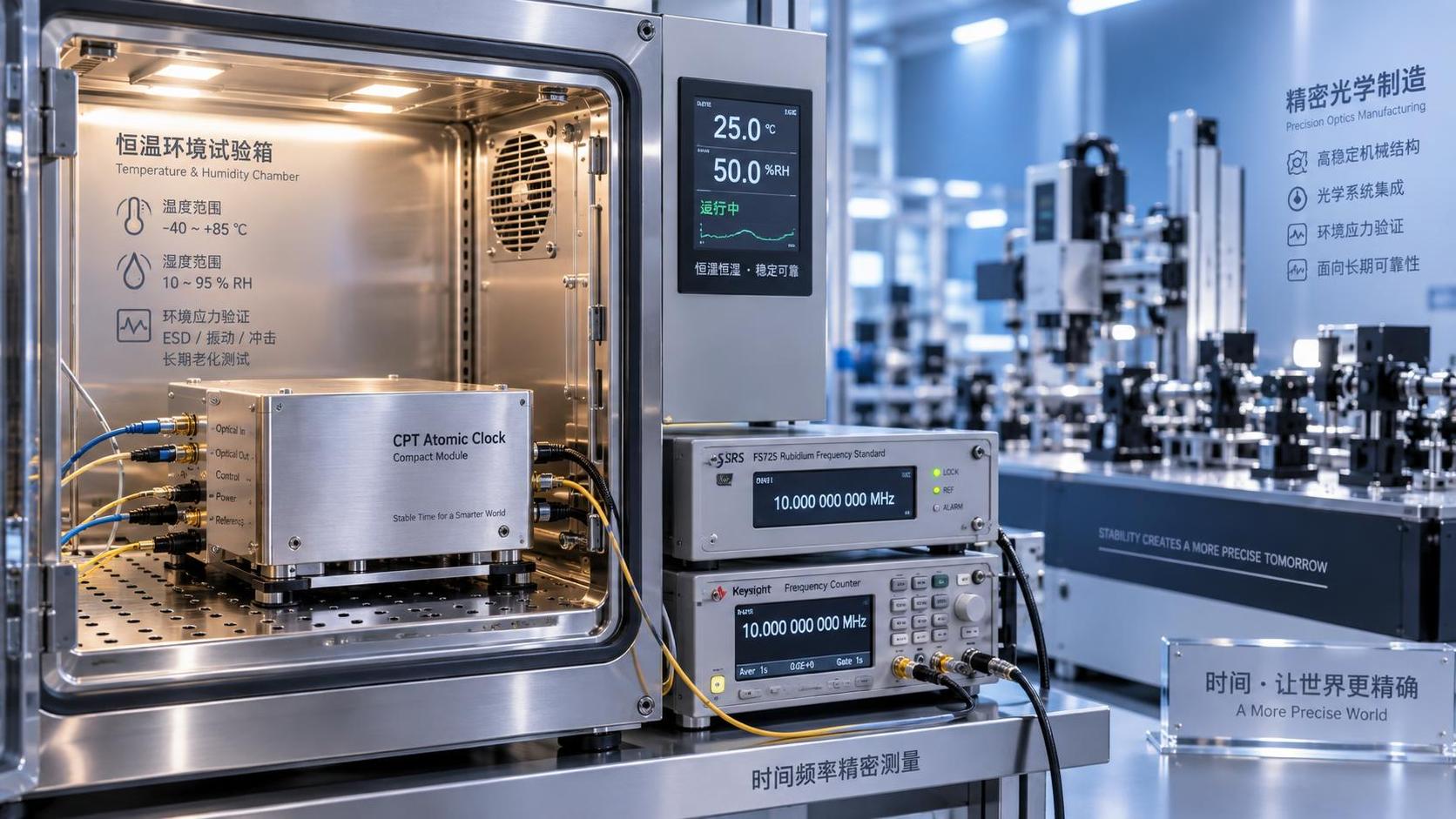
- Test frequency stability under realistic operating cycles, not only bench conditions.
Why integrated solution capability matters
Time and frequency performance depends on more than the clock core.
System design, power conditioning, distribution, synchronization protocols, and environmental engineering all shape final results.
That is why many projects benefit from suppliers with deep time and frequency expertise and full-solution support.
A high-tech enterprise focused on precision time and frequency products can simplify design risk while improving global deployment consistency.
Common misjudgments when evaluating a cpt atomic clock
One common error is assuming drift matters only in telecommunications or defense applications.
In reality, optical manufacturing equipment increasingly depends on reliable local timing for precision and traceability.
Another mistake is focusing only on initial accuracy while ignoring holdover and long-term stability.
For many industrial systems, the real challenge appears after hours or days of uninterrupted operation.
A third oversight is evaluating a cpt atomic clock without considering system-level thermal design and signal distribution.
Even a strong clock reference can underperform if integration quality is weak.
Often ignored decision factors
- Recovery behavior after power changes
- Aging behavior over service life
- Local oscillator discipline strategy
- Mechanical and thermal packaging fit
- Security and robustness of timing infrastructure
Next steps for selecting the right timing path
If optical manufacturing equipment must deliver repeatable precision, timing drift should be measured as a process risk, not a background parameter.
Start by defining which scenario best matches the equipment environment and where a cpt atomic clock would create measurable improvement.
Then evaluate stability, holdover, power consumption, integration complexity, and lifecycle support together.
For advanced projects, working with a specialized time and frequency partner can shorten verification time and improve deployment confidence.
With strong technical backing and innovation capability, the right solution can enable accurate, stable, low-consumption, and secure space-time infrastructure worldwide.
In that context, a cpt atomic clock is not only a component choice. It is a practical strategy for controlling drift before drift controls performance.
CONTACT US
Please use the form below to get in touch.
If you need a reply we will get in touch as soon as possible.

Equity Code 300152