


Equity Code 300152
RELATED
 Rubidium Atomic Clock Performance Metrics: What Technical Buyers Need to Know2026-02-28
- Case Study: Implementing Optical Pump Cesium Frequency Standards in Aerospace Applications2026-02-02
- Latest Innovations in Optical Pump Cesium Frequency Standards: 2023 Industry Updates2026-01-28
- Optical Pump Cesium Frequency Standard Maintenance: Best Practices for Long-Term Reliability2026-01-26



MESSAGE
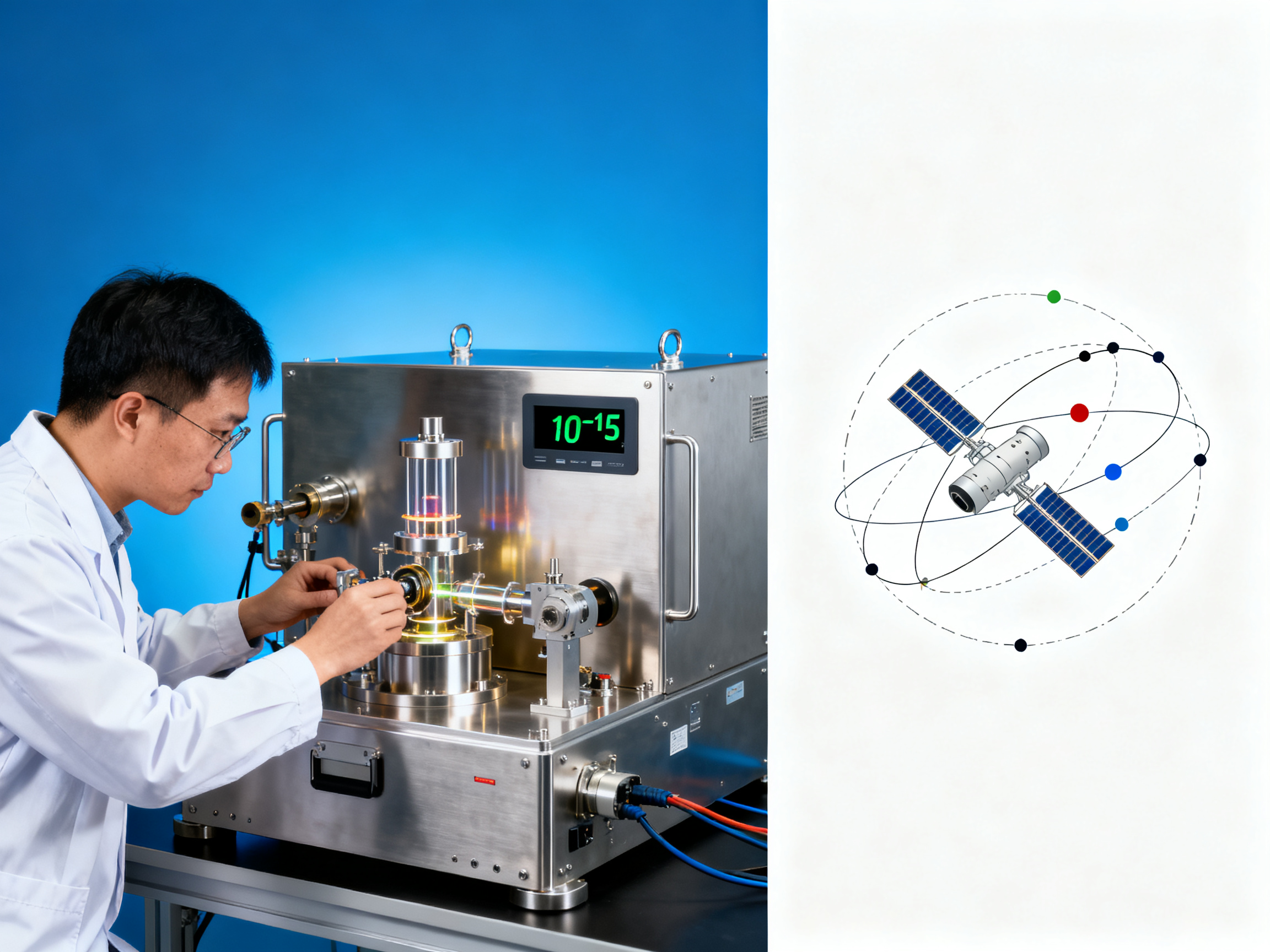
Supply chain disruptions are causing delays in Rubidium atomic clock modules, prompting urgent searches for reliable alternatives. For precision-dependent industries like optical manufacturing, solutions such as CPT atomic clocks are emerging as viable, low-power, high-stability options in 2024. Discover how these advanced timekeeping technologies can ensure continuity and performance under pressure.
Why Rubidium Atomic Clocks Are Critical in Optical Manufacturing Systems
In the field of optical manufacturing, especially in applications involving ultra-precise laser alignment, interferometry, and photolithography, timing accuracy at the nanosecond level is not a luxury—it’s a necessity. Rubidium atomic clocks have long served as the backbone of time synchronization in such environments due to their excellent balance of stability, size, and cost-effectiveness. These devices leverage the hyperfine transition frequency of rubidium-87 atoms (6.834682 GHz) to maintain long-term frequency stability, often achieving Allan deviations below 1×10⁻¹¹ at 1-second intervals. This level of precision ensures that optical systems remain phase-coherent across distributed nodes, which is essential for maintaining yield and repeatability in semiconductor fabrication, metrology equipment, and fiber-optic sensor networks.
However, recent global supply chain constraints—driven by geopolitical tensions, raw material shortages, and increased demand from defense and telecommunications sectors—have led to extended lead times for Rubidium atomic clock modules. Some manufacturers report delays exceeding 6–9 months, directly impacting production schedules and R&D timelines. For system integrators and OEMs in the optical manufacturing space, this creates a pressing need to evaluate alternative timekeeping technologies without compromising on performance or reliability.
Moreover, traditional Rubidium clocks come with inherent limitations: relatively high power consumption (typically 8–12 W), sensitivity to temperature fluctuations, and a finite operational lifespan due to rubidium lamp degradation. As next-generation optical systems trend toward miniaturization, energy efficiency, and autonomous operation, these drawbacks become increasingly significant. This has accelerated interest in solid-state alternatives that offer comparable stability with improved robustness and lower lifecycle costs.
CPT Atomic Clocks: The Next Generation of Compact Timekeeping
Coherent Population Trapping (CPT) atomic clocks represent a breakthrough in miniaturized timekeeping technology, offering a compelling alternative to conventional Rubidium atomic clocks—especially in resource-constrained and high-reliability optical manufacturing environments. Unlike traditional vapor-cell designs that rely on RF discharge lamps, CPT clocks use modulated laser light to excite quantum states within a rubidium vapor cell, eliminating the need for bulky components and significantly reducing power requirements. Modern CPT-based modules consume as little as 1–2 watts, making them ideal for embedded applications in portable optical test equipment, edge-based sensing arrays, and automated calibration systems.
Despite their compact form factor, CPT atomic clocks deliver impressive short- and medium-term stability. Leading models achieve Allan deviations of 2×10⁻¹¹ at 1 second and maintain aging rates below 5×10⁻¹¹ per month—performance metrics that rival mid-tier Rubidium standards. Their solid-state design also enhances shock resistance and thermal resilience, critical attributes for deployment in industrial settings where vibration and ambient temperature swings are common.
From an integration standpoint, CPT atomic clocks offer plug-and-play compatibility with existing timing architectures. They support standard outputs including 1 PPS (pulse per second), 10 MHz sine or CMOS, and serial interfaces for remote monitoring and control via UART or I²C. Many units also feature built-in disciplining algorithms that allow seamless holdover operation when GPS signals are temporarily lost—a frequent concern in shielded cleanroom facilities used in optical component fabrication.
Comparative Analysis: CPT vs. Traditional Rubidium Atomic Clocks
To assist technical and procurement teams in making informed decisions, the following comparison highlights key differences between CPT atomic clocks and traditional Rubidium atomic clocks in the context of optical manufacturing applications:
This data illustrates that while traditional Rubidium atomic clocks still hold a slight edge in absolute frequency stability, CPT-based solutions close the gap significantly while outperforming in nearly every other practical metric relevant to optical manufacturing operations. The reduced warm-up time alone can improve equipment uptime during shift changes or maintenance cycles, while the smaller footprint enables integration into tighter chassis designs—such as handheld spectrometers or modular beam-steering controllers.
Strategic Implementation: Ensuring Continuity in High-Precision Timing
For organizations facing delivery delays in Rubidium atomic clock modules, transitioning to CPT atomic clocks isn’t merely a stopgap—it’s a strategic upgrade aligned with future industry trends. System architects should consider a phased migration approach, beginning with non-critical subsystems to validate performance under real-world conditions. Field trials conducted in optical calibration labs have demonstrated that CPT clocks maintain synchronization accuracy within ±5 ns over 24-hour periods when disciplined by GNSS, even under partial signal occlusion.
Additionally, leveraging hybrid timing architectures—where CPT clocks serve as primary holdover references backed by network time protocols (e.g., PTP over IEEE 1588)—can further enhance resilience. In multi-node optical processing lines, precise time alignment across lasers, detectors, and motion stages reduces jitter-induced errors, directly improving product consistency and throughput.
Backed by SPACEON Electronics’ decades of expertise in time and frequency systems, our CPT atomic clock solutions are engineered specifically for mission-critical industrial applications. With rigorous testing against MIL-STD-810G environmental standards and compliance with ITU-T G.811 and G.823 timing specifications, our modules provide the assurance needed for seamless adoption across global supply chains.
Conclusion: Secure Your Timing Infrastructure with Proven Alternatives
The current supply chain challenges affecting Rubidium atomic clock modules underscore the importance of diversifying timing sources in precision-dependent industries like optical manufacturing. CPT atomic clocks offer a technically mature, commercially available alternative that combines low power consumption, compact design, and robust performance—making them ideal for both new deployments and legacy system upgrades.
As a high-tech enterprise focused on delivering high-precision time and frequency products, we enable global customers to build accurate, stable, low-consumption, and secure space-time infrastructure. By integrating cutting-edge CPT technology with proven engineering rigor, we help mitigate risk, reduce downtime, and future-proof your optical systems against ongoing market volatility.
Don’t let component shortages disrupt your production timeline. Learn more about our CPT atomic clock solutions and discover how they can ensure continuity and performance in your optical manufacturing environment. Contact us today to speak with a technical specialist and request a sample for evaluation.
CONTACT US
Please use the form below to get in touch.
If you need a reply we will get in touch as soon as possible.

Equity Code 300152